Touchless entry upgrades
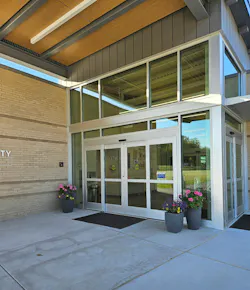
Across every building sector, owners are investing in modernization initiatives. When stakeholders consider renovations and upgrades, they’re apt to focus on high-impact, visible improvements to interiors, upgraded technology, and greater energy efficiency. Yet one of the most frequently used and strategically important building systems is often overlooked: the entrance.
Entrances represent the first (and last) physical interaction people have with a building. They shape first impressions, influence accessibility and traffic flow, contribute to security, and play an important role in occupant comfort and convenience.
As societal expectations increase for inclusive design, touchless access, and efficient energy use, aging entrance systems may no longer support the needs of today’s occupants or visitors. Modernizing an entrance is an opportunity to improve building performance, support accessibility goals, enhance safety and security, and create a more welcoming environment.
Automatic door systems can help address these objectives. Whether through retrofits or comprehensive entrance modernization projects, building owners can seize an opportunity to transform an overlooked building component into a multi-functional asset.
CHANGING EXPECTATIONS
Several trends have reshaped what people expect from public facilities. Building owners find themselves having to meet these expectations while also serving the demands of their own internal stakeholders.
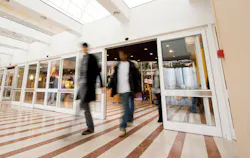
“Obviously, there is overlap between these two broad audiences,” said Arnie Kravitz, district sales manager for ASSA ABLOY. “Generally, the public values convenience, accessibility, and hygiene while Stakeholders are focused on energy efficiency and building security.”
Consumers have become accustomed to amenities that minimize effort and delay. In busy facilities, even small bottlenecks at entrances can affect traffic flow, create congestion, and negatively impact user satisfaction. Automatic doors, touchless activation systems, and integrated access technologies help smooth these interactions by reducing barriers at the point of entry.
Nationally, there’s increased focus on accessibility. It is no longer viewed solely as a regulatory requirement. More organizations view inclusive design as an essential part of customer service, community engagement, and employee convenience. An entrance that is easier to use improves the experience for all occupants, not just those living with disabilities.
Post-COVID, there’s greater awareness of how germs can spread via building touchpoints. Reducing unnecessary physical contact with doors is now the goal in many environments, not just healthcare facilities. Virtually all public buildings can benefit from touchless door technologies that help support these objectives while also improving convenience.
Concurrently, security requirements continue to evolve. Modern entrances increasingly serve as part of these broader security strategies. Facilities often must balance two objectives that can sometimes appear conflicting: creating a welcoming environment while maintaining appropriate access control. Today’s automatic doors can support both goals through integration with access controls, credentialing systems, and monitoring technologies.
Public buildings are pursuing sustainability goals that reduce energy consumption and greenhouse gas emissions, and improve operational efficiency while maintaining occupant comfort and safety. A major challenge is the efficient use of heating, ventilation, and air-conditioning (HVAC) systems and reducing the unintended egress of treated air.
HOW AUTOMATIC DOORS RESPOND
“Automatic doors impact all of these concerns,” said Kravitz. “It goes well beyond simple aesthetics. If building owners value modernization projects that deliver measurable operational and organizational benefits, entrance upgrades can be the answer.”
Convenience. Automatic doors provide a significant convenience benefit by eliminating the need to physically open and close a door. That single improvement makes building access easier for everyone, including individuals with disabilities, older adults, parents with strollers, and people carrying packages. In high-traffic public facilities, automatic doors also support smoother pedestrian flow, helping reduce congestion while making entrances safer, more comfortable, and more efficient for all users.
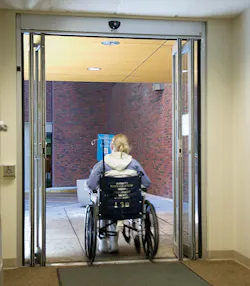
Accessibility and inclusion. They also immediately enhance accessibility and inclusion. “Building owners are recognizing that accessibility is not solely about compliance. It helps ensure that facilities can be comfortably used by the broadest possible range of people,” said Kravitz. Automatic and touchless entrance systems better accommodate diverse user needs while improving overall traffic flow and operational efficiency.
Many facilities experience predictable surges in pedestrian traffic, including hospitals during visiting hours, retail locations during peak shopping periods, schools during class changes, and office buildings during arrival and departure times. Modern automatic door systems help manage those surges by reducing bottlenecks and improving movement through the facility.
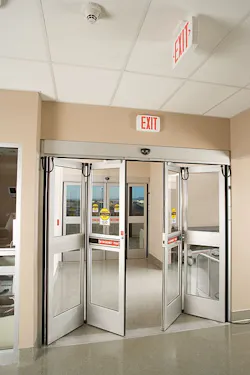
Health forward. Touchless automatic doors also contribute to a more hygienic environment. By reducing the need for users to make physical contact with door surfaces, touchless entry systems can help limit the potential transfer of germs and contaminants. This supports public health and sanitation objectives while providing the kind of touch-free building access many visitors, patients, employees, and customers now expect. For building owners, these systems offer an attractive way to enhance user confidence, improve cleanliness, and create a more modern, health-forward visitor experience.
Sustainability. Automatic doors can also support energy savings and broader sustainability objectives. Although building owners often focus first on HVAC and lighting when pursuing energy improvements, entrance systems also have an important role to play. Poorly functioning or outdated doors can contribute to air infiltration, temperature fluctuations, and added strain on climate control systems.
“Modern automatic door systems help manage opening and closing cycles more effectively, support indoor environmental control, and help improve overall building efficiency,” said Kravitz. As sustainability goals become more important, entrance performance should be evaluated as part of a comprehensive building strategy.
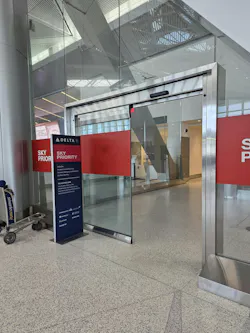
Controlled access. When paired with access control systems, automatic doors can also become part of a state-of-the-art building safety strategy. Integrated systems allow facilities to balance convenience with security by helping ensure that only authorized individuals gain access to restricted areas while still maintaining a welcoming, efficient experience for employees and visitors.
These systems can support a range of security objectives, from managing daily access and tracking entry activity to facilitating lockdown procedures or emergency response protocols when necessary. “Our industry can take virtually any automatic door and make it a security door with additional hardware and ballistic glass,” said Kravitz.
OPEN THE DOOR TO MODERNIZATION
When building owners evaluate the how to modernize their facilities, they should view entrance systems as meaningful contributors to overall infrastructure rather than simple points of access. Automatic door upgrades can be a practical way to address multiple priorities simultaneously, including accessibility, customer experience, operational efficiency, sustainability, and security.
Unlike capital improvements that might serve only a single purpose, modern entrance systems deliver benefits that impact every occupant and visitor while supporting broader facility management objectives. They help create more welcoming environments, improve building performance, support inclusion initiatives, and contribute to long-term operational goals.
In an era when organizations are expected to do more with existing facilities, touchless entry technologies are a cost-effective modernization strategy with measurable impacts on user experience and building operations. “For owners seeking improvements that align with today’s expectations while preparing facilities for tomorrow’s needs, upgrading the entrance systems should be part of any discussion,” said Kravitz.
About AAADM
The American Association of Automatic Door Manufacturers (AAADM) is a trade association of manufacturers of automatic pedestrian door systems. AAADM was founded in 1994 with the following mission: to increase awareness of automatic doors and accessibility needs; to increase education, training and professionalism among installers and service providers; and to generally promote the safe use of automatic doors.
AAADM is here to help
Regardless of what type of door best fits your facility’s needs, make sure you are contracting with a company that employs AAADM Certified Technicians to ensure your doors are installed to the ANSI 156.10 or ANSI 156.19 pedestrian safety standards. You can find a directory of AAADM members here:
https://www.aaadm.com/member-directory/index.html