This blog post was authored by 40 Under 40 Class of 2025 alumni Maria Katticaran, AIA, LFA, Project Manager, HDR.
Airports pour extraordinary resources into terminal design, from iconic roofs and grand halls to intuitive wayfinding with local art and contextual relevance. However, passengers form their first impression long before they reach the ticketing lobby.
For most travelers, the emotional peak of the journey happens curbside: juggling bags, scanning for doors, coordinating rideshare pickups, and navigating crowds. When curbside passenger experiences don’t meet expectations, whether due to unclear waiting zones, poor lighting, pedestrians drifting into travel lanes, or drivers double parking, the impression of the terminal is influenced before passengers even step inside.
Although design of the arrival and departure experience outside of the terminal has historically been focused on meeting minimum clearances and keeping cars moving, landside zones are now being designed with the same rigor, clarity, and hospitality of the terminal itself. Landside performance is increasingly recognized as integrated with terminal performance and often considered the first chapter of “the passenger experience” story.
Reframing the Front Door at Pittsburgh International Airport
At PIT, the design team, comprised of HDR, Gensler, and luis vidal + architects, approached the landside environment as one coordinated arrival system.
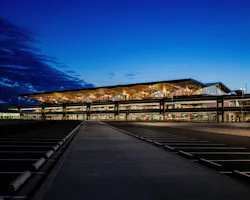
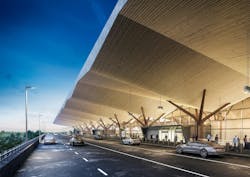
A new three-level entry roadway, approximately 1,300 feet long, is more than a connector. It functions as the airport’s architectural handshake, shaping the passenger experience before anyone reaches the terminal doors. The bridge environment—its lighting, edges, and waiting areas—is designed as part of the terminal experience, not leftover infrastructure.
The Constraints That Defined the Solution
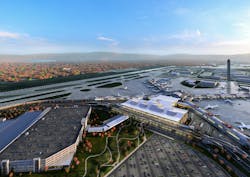
Prominent among constraints surrounding the entry bridge were three active tunnels beneath the bridge. These tunnels remained in service throughout construction, dictating where columns and foundations could land and requiring protection zones that shaped the entire structural strategy. That single constraint rippled through the structural grid, roadway alignment, and architectural rhythm.
With multilevel circulation in tight proximity to the terminal, it was important to treat the bridge and connected environments as a single, integrated system. Roadway modifications, utilities, and curbside environments had to function as one seamless arrival sequence. As a design team, we leveraged systems thinking to shape the front door as a coherent, integrated experience.
Sequencing Is Design: Collaboration and Delivery
With three active tunnels, construction sequencing shaped the design from the start.
The most productive progress came from early alignment across architectural, structural, civil, and utilities teams, alongside airport operations and security. Designing temporary conditions with the same care as the final experience helped with safety, constructability, and resilience throughout the project.
By treating interim phases as design problems to be solved, we maintained safety as the top priority and operational continuity while still elevating the arrival experience at every step.
Design Responses: Infrastructure as Experience
Treating the bridge and curbside as places people occupy, not just move through, kept the design team returning to one question: what does a traveler need in the first five minutes or last five minutes of their journey?
Top among those needs are comfort and clarity. As the curbside is a dwell zone, with people waiting for rides, regrouping, and repacking bags, we placed seating where people actually pause and coordinated with pedestrian pathways so that those who are waiting would not spill into circulation. Appropriate lighting served both safety and hospitality, reducing glare, improving visibility, and supporting recognition when stress is highest. And because this is in Pittsburgh, which can experience extremely cold weather, providing weather protection was critically important.
With the goal of designing the safest path as the most natural one, the pedestrian zone is obvious and protected, reducing conflict points by providing clear edges, predictable crossings, and intuitive routes.
Consistent with the goal of integrating the bridge with the terminal to create one unified experience, the under-bridge condition was designed as a ceiling environment with cladding and integrated lighting. Intentional landscaping added human scale buffers and reinforced continuity from bridge to terminal.
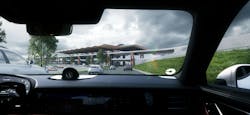
The experience is planned for real-world behaviors: rideshare clustering, family drop-offs, last-minute lane changes, and passengers who need just a little more time through the travel scramble. Designing for this reality made the curbside more resilient.
The Quiet Goal: A Welcoming, Legible, Safe Curbside
At PIT, the design team’s goal was to create a seamless travel experience for all—a calm, legible, and safe arrival sequence that reduces friction for passengers and supports airport operations, even before passengers enter the terminal.
That lesson extends far beyond aviation. The same approach belongs to any overlooked arrival zone—transit hubs, hospitals, campuses, civic buildings—anywhere the “in‑between” space shapes how people feel, move, and trust what comes next.
About the Author
Maria Katticaran, AIA, LFA, is a transportation architect and urban designer at HDR, recognized for her leadership in shaping next-generation mobility environments across the United States and Canada. Her work spans complex, high-impact infrastructure projects—including Pittsburgh International Airport, Los Angeles Union Station, and system-wide transit modernization programs for BART and CalTrain—where she integrates architecture, operations, and passenger experience into cohesive, high-performing systems. Additional insights from HDR can be found on the firm’s website.
About the Author
HDR
HDR's Insights blog is written by our employees. While we are most well-known for delivering architecture and engineering services—for adding beauty and structure to communities through high performance buildings and smart infrastructure, we provide much more than that. We create an unshakable foundation for progress because our multidisciplinary teams also include scientists, economists, builders, analysts and artists. Our thought leader bloggers represent offices from around the world and write about ideas, experiences and insights into our practice and the greater design community. Follow us on Facebook, Instagram, LinkedIn, Twitter, and YouTube.