10 trends in the affordable housing sector
Editor's note: This article is one of six editorial reports featured in BD+C's 2025 Multifamily Annual Report, published in December 2025. The 71-page Annual Report is available for free download here (short registration required).
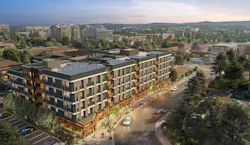
In July, a development team started the first phase of Innovative Urban Village, a $270 million project on the 10.5-acre campus of the Christian Cultural Center in East New York, Brooklyn. Phase 1 will deliver 385 apartments for households earning between 30% and 80% of the area median income. Ninety-four of those apartments are reserved for people and families who were formerly homeless and in need of on-site support services. Phase 1 will also offer 17,000 sf of retail and commercial space that includes a grocery. Eventually Innovative Urban Village will consist of 10 buildings and 1,975 apartments, with no fewer than half of those units earmarked for people and families whose incomes fall within 30-60% of the AMI. About one quarter of the units are reserved for moderate income tenants, 80-100% AMI. The total development cost of this project is pegged at $1 billion.
These kinds of mixed-income, mixed-use projects give market watchers hope that the industry can make headway in reducing the severe shortfall in affordable housing that has confounded developers, their AEC partners, policymakers, and people most in need of housing that isn’t traveling on the residential sector’s current inflationary rocket ship.
“We have vastly underbuilt new housing stock over the decades,” says Lily Trinh Ciammaichella, AIA, LEED BD+C, Associate Principal for the architecture and design firm KTGY. “As a result, we need to continue building a wide range of housing options, including affordable housing to keep our communities accessible and diverse for all income levels.”
Affordable housing is covered under a wide umbrella, as is government assistance programs that include tenant vouchers and low-income tax credits for development. Earlier this year, Shelterforce.org, which reports on the affordable housing sector, went beyond the standard definition—that a home is affordable if the household is spending no more than 30% of its income on it—to ask the question “affordable to whom?”
In that article, Shelterforce ticked off no fewer than six categories for affordable housing, based on how the housing was financed, what percentage of their incomes renters or owners are paying, and whether they require supportive services.
Because it targets a cross-section of individuals and families, affordable housing isn’t cookie cutter the way other residential types might be. And what’s getting built often belies affordable’s Spartan reputation. For example, Habitat for Humanity of Greater Los Angeles last summer dedicated the newly completed Holmes Development in South L.A., whose affordable two-story townhomes include two-car garages, drought-tolerant landscaping, solar energy systems, and energy efficient appliances.
The diversity of the affordable housing market also gives developers the opportunity to target niches. In Chicago, which has the third-largest Native American population in the U.S., the building contractor Skender broke ground in July on Jigzibik, a 62,000-sf, seven-story, mixed-use development with 45 rental units that will become Chicago’s first affordable housing project centered on serving Native Americans. The project—designed by Canopy Architecture + Design, and developed by Visionary Ventures and Full Circle Communities with the Native American Advisory Council—is scheduled for completion in the second half of 2026.
Jigzibik is a Potawatomi word meaning “at the river’s edge,” which might also serve as a good way to describe the direction advocates of affordable housing hope this sector is headed. The following article takes a deeper dive into the state of the affordable housing market and identifies 10 trends based on interviews with and information from more than 15 AEC firms and a recent webinar on this topic posted by Yardi Matrix.
1. Supply still lags demand, by a lot
By year’s end, the general contractor R.D. Olson Construction will have completed an affordable housing project in Woodland Hills, Calif., and have broken ground on another in San Diego, with more projects in its pipeline.
But in a southern California region that needs more than 500,000 new affordable housing units just to keep up with demand, developers and builders, individually and collectively, are barely making a dent.
The same is true in markets across the country where affordable housing shortages are “persistent” and “unlikely to be resolved within the next decade,” asserted Jeff Adler, Vice President of Yardi Matrix, which tracks more than 27,000 properties in 175-plus markets. Speaking on a webinar about this topic last June, Adler painted a dire picture where impediments to development are stretching out the actual start time for affordable housing projects to five or six years; and where 600,000 private-sector low-income housing units were in danger of their compliances expiring.
In its Multifamily Forecast-Q3 2025, released in early August, Yardi Matrix projects a 21.2% decrease in affordable housing completions to 75,496 units in 2025, a number Yardi Matrix expects to continue falling to 71,919 units in 2026 and 49,031 completions in 2027.
“The timeframe for affordable housing is often lengthier due to different application requirements and financing platforms,” according to the engineering firm Kimley-Horn’s responses to questions from BD+C.
On top of these factors, operating expenses for an affordable housing complex often exceed their rental incomes because of rising costs for payroll, insurance, and utilities.
Building activity varies by market and funding availability. Becky Baron, a Principal-Advisory with the architectural design firm HKS, sees the greatest opportunities in the Southern Atlantic Region. The West, she says, has both the highest inventory and projected construction starts. The Midwest offers the most attractive affordable rents and moderate pipeline activity; and the Northeast’s pipeline is robust, but its rents are also among the highest nationally.
The affordable housing projects securing financing in Chicago are those initially supported by competitions or programs from the city of Chicago, observes Justin Wortmann, a Senior Project Architect with Perkins&Will. His colleague in the Southeast, Colline Hernandez-Ayala, a Corporate and Commercial Regional Practice Leader, says the city of Atlanta is “prioritizing” affordable housing projects to achieve its goal of building or preserving 20,000 units by 2030.
Summit Contracting Group’s President, Marc Padgett, sees positive trends like Opportunity Zones, low-income tax-credit availability, and local incentives that incorporate affordable and workforce housing.
The private and public sectors seem more keenly aware of the urgency needed to address the affordable housing crisis. “Feasibility and planning increase has increased among nonprofit and for-profit developers,” says Peter Bafitis, AIA, Managing Principal with RKTB Architects in New York, whose “City of Yes” zoning law passed last year encourages construction and conversion specifically for adding affordable housing units. (Adolfo Carrion, New York’s Deputy Mayor, said in July that the administration of Mayor Eric Adams will have added 100,000 affordable housing units by the end of its first term.)
Neighboring New Jersey is currently in the fourth round of Fair Share housing obligations under that state’s Fair Housing Act, which requires municipalities to devise inclusionary (i.e., mixed-income) and 100% affordable development solutions to meet their obligations by 2035. New Jersey’s goal is to build 85,000 units in the next 10 years. Joshua Zinder, AIA, LEED AP, Managing Partner with the design firm JZA+D in Princeton, N.J., is seeing growing interest among developers in “missing middle housing solutions”: house-scale development aimed at creating affordable, sustainable, diverse, and walkable communities.
2. Affordable vs. Market Rate: The gap closes
The stratification within the affordable housing sector is as pronounced as ever. “There’s little being built for middle-income renters, despite considerable demand,” observes Bafitis of RKTB Architects in New York. This dynamic, he continues, leaves just two predominant areas of focus for development: subsidized affordable and luxury.
Indeed, government tax credits “may be the only way that construction of affordable housing is viable,” says Patrick Hazard, Associate Principal with Merriman Anderson Architects.
Yardi Matrix’s Adler cautioned that housing affordability is “deteriorating,” and that affordable leasing is now “highly competitive” with market-rate products. That’s certainly true in New Jersey, where renting can be more expensive than owning, says Zinder, with Princeton, N.J.-based JZA+D.
“The affordability gap is reshaping multifamily housing,” says Shelby Joubert, Director of Preconstruction for the general contractor Swinerton. And the distinctions between affordable and market-rate housing have become sharper, he says, with market rate catering to higher-income renters with amenities-rich offerings, and affordable prioritizing cost efficiency and, more frequently, support services like childcare.
“Some of the best and more creative multifamily developments is actually happening in the affordable sector,” asserts John B. Cruz III, President and CEO of the Massachusetts-based GC Cruz Companies. For example, one of Cruz’s recent projects, the Michael E. Haynes Arms Apartments in Roxbury, Mass., caters to a range of income levels, but each of its 65 units is designed with the same quality level of finishes.
The quality of newly constructed affordable housing is “generally on par with that of market-rate developments,” confirm three development services executives with the engineering firm Kimley-Horn: Jon Kraft, Senior Vice President, Meaghan McGee, PE, LEED AP, Senior Associate, and Shelby Madrid, PE, Associate. Vishaan Chakrabarty, FAIA, FRAIC, Founder and Creative Director of Practice for Architecture and Urbanism (PAU), elaborates that choosing between affordability and design quality is “a false choice,” and points specifically to one of his firm’s projects—the aforementioned Innovative Urban Village in East New York—where the two “go hand and hand.”
Safety and consistent maintenance are essentials for any multifamily property, regardless of the resident’s income level. Where differences arise are in the choices of finishes and the types of amenities provided, says Padgett of Summit Contracting, which generates about 15% of its work annually from affordable and tax-credit housing projects.
“For the most part, people living in affordable and market-rate developments share the same needs,” observes Ciammaichella of KTGY. She’s seeing an increase in flexibility in common and shared spaces at affordable properties, as well as coworking areas, bike storage, onsite laundry, and resident services.
P&W’s Wortmann adds that energy codes are requiring higher-quality envelopes and mechanical systems on new and renovated affordable housing.
To get a better handle on prospective renters, the GC R.D. Olson Construction and the Housing Authority of the City of Los Angeles conducted extensive community and demographic outreach through surveys and charettes for Olson’s Rose Hill Courts housing development that serves extremely low-income households in the El Serrano neighborhood in northeast Los Angeles. El Serrano is family oriented, so the units for the second phase of this project will specifically be constructed to house large families.
“Community research is the key to understanding what demographics must be served, and what facilities will work best on an affordable basis,” says Bill Wilhelm, R.D. Olson’s President.
3. Demand for new builds and renovations equally strong
Demand is robust for both new construction and renovation to create more affordable housing, say AEC interviewees. “We’re seeing an acceleration of every approach that adds to the affordable housing supply,” says Jay Szymanski, AIA, NCARB, LEED AP, Principal with The Architectural Team (TAT).
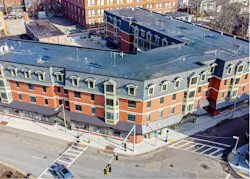
He notes that renovations and moderate rehabs have been “bedrocks” of this sector for years, and these include adaptive reuse projects like Stone Mills Lofts in Lawrence, Mass., a recently completed $40 million Winn Development-led conversion of a nearly 200-year-old mill building into an all-electric affordable housing community with 86 rental units that achieves approximate levels of Passive House energy efficiency.
AEC sources, however, acknowledge that affordable housing sector isn’t monolithic when it comes to embracing one delivery method over another. “While many noble attempts have been made to encourage adaptive reuse, we still have not seen demand for that typology match the enthusiasm for the concept,” says Wortmann in P&W’s Chicago office.
Reno vs. new, too, “depends in large part on local market dynamics,” says Cruz. He notes that new construction was the most viable approach for an upcoming affordable housing project in College Park, Md., whereas his firm is also very active in New Bedford, Mass., whose supply of underutilized existing building stock and undeveloped building sites makes adaptive reuse and new construction “equally viable.”
This dynamic can be situational. KTGY’s Ciammaichella notes that, over the past several years, as interest rates climbed and financial sources became more competitive, some affordable housing developers shifted toward renovations and acquiring existing buildings. Wilhelm of Olson Construction corroborates this when he states his firm is seeing more abandoned structures like retail malls turning into affordable housing units.
Baron of HKS observes that a developer’s preference for renos or new builds is often shaped by regional factors such as the availability of greenfield land or suitable vacant assets. In land-locked areas, she says, the repurposing and renovation of existing buildings “have become a distinct and increasingly vital category of project work.” On the other hand, most of affordable housing projects engaged by the California-based architecture firm AO are new builds that are components of urban infill redevelopments.
Where new construction might have an edge on renovation and adaptive reuse as a delivery choice is in the density it yields, which is always an issue for affordable housing projects. “New construction typically results in a greater increase in housing units compared to renovation,” says the Kimley-Horn executives.
4. More states are clearing paths for project approvals
AEC firms’ laments about impediments to affordable housing construction are familiar and longstanding. But some firms also see some relief in new zoning and other regulations that aim at making approvals for projects a bit smoother.
Perhaps the single biggest—and, currently, most intractable—roadblock is access to funding; several of the firms interviewed put that at the top of their lists for why the economics for affordable housing sometimes unravel. “Affordable housing has to be subsidized for the numbers to work” say Kevan Thakkar and Cynthia Shonaiya, Principals and Affordable and Senior Housing Sector Leaders at Hord Caplan Macht, “and most funding is sourced from local and federal government programs, which have undergone recent budget cuts.”
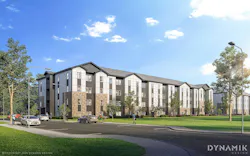
The projects that do move forward, observes Baron of HKS, tend to be those with comprehensive programming that goes beyond housing by incorporating thoughtful amenities that support daily well-being and quality of life.
Other impediments to affordable housing, say AEC firms, are overregulation, entitlement snags, long permitting timelines, and, most prominently, rising construction and land costs. Some firms have also encountered community resistance. “There is some stigma in the public opinion [about] living near affordable housing; many people have an image of run-down ugly buildings,” observes Padgett of Summit Contracting. “But that simply is not the case anymore, at least not in what we build. Many of our affordable products look very similar to what we would see on most market-rate projects, the difference is usually in the finishes and amenities areas.”
The good news, say AEC firms, is that barriers to affordable housing are breaking down, perhaps not as fast as some firms would like, but the changes are palpable.
Cruz, the Massachusetts builder, points to what he calls “smart revisions” in the recent Federal budget bill to the Low-Income Housing Tax Credit program that reduce the private activity bond threshold and increase allocations for each state. That federal bill calls for a 12.5% increase in funding for the tax credit program to $14 billion, and a reduction to 25% from 50% in the financing threshold to receive the credits.
In California, KTGY’s Ciammaichella is seeing “a tremendous amount” of legislation being passed that is intended to help expedite the delivery of all housing, including affordable, starting with SB 330, which has been in effect for five years and provides developers with a clearer path forward for project approval. Ioanna Magiati, a Partner at the architecture firm AO, points to AB 130 and SB 131, which California Gov. Gavin Newsom signed into law last June. Key provisions in the legislation include California Environmental Quality Act exemptions for housing and a freeze on state and local building code updates for nearly six years, with certain exceptions.
P&W’s Hernandez-Ayala notes that, in the Southeast, existing zoning policy does not usually support increasing residential or mixed-use density in areas where affordable housing options are needed the most. That’s why she sees underutilized industrial land and publicly owned land near transit as “prime opportunities” for developing mixed-use, mixed-income projects to address the affordable housing shortage in urban areas around the nation.
5. Labor is mostly available to keep projects on track
Any ambitions that municipalities harbor about alleviating their affordable housing shortages must confront the uncertain availability of the labor market. This dilemma is compounded by the federal government’s recent threats and actions raiding jobsites to find and arrest undocumented workers.
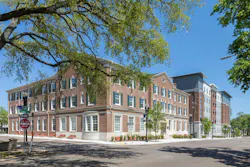
Bafitis of RKTB says labor remains “limited” in New York City, especially for skilled workers in key subtrades. Jim Stanley, Executive Vice President with the GC Suffolk’s Los Angeles division, concurs, noting that labor availability “continues to be one of the biggest challenges” for affordable housing construction in the markets Suffolk serves.
Affordable housing projects, Stanley explains, typically face strict deadlines tied to financing milestones, and even modest delays caused by labor access can jeopardize funding. “At the same time, labor shortages drive up wages and trade partner bids.” He says that Suffolk reduces this pressure by leveraging technology and data analytics to proactively manage schedules, optimize trade coordination, and control costs.
Our research finds that developers and AEC firms in certain markets are still able to hire the workers they need to keep projects moving forward. “We have not encountered any issues [about labor availability] for a number of years now,“ says Summit Contracting Group’s Padgett. The labor market “is loosening up some,” adds Crux, the Massachusetts-based builder. In the Denver metro area, Madrid of Kimley-Horn says that labor “is generally available,” although it’s scarcer in high-country mountain communities where affordable housing is arguably most needed, And finding the right housing labor “creates additional costs.”
Joubert of Swinerton acknowledges that skilled workers are often drawn to projects with higher margins than affordable housing, which complicates the hiring process. Swinerton mitigates this, he says, by partnering with unions and workforce development programs “to remain competitive.”
6. Developers reconsidering modular options
Given the unpredictability of materials and labor costs, and delays in getting projects off the ground, AEC firms say their developer partners are more open to considering modular design and construction to get more affordable housing built quicker.
However, this trend is market specific, and not everyone is sold on modular to speed the process and make it cheaper. PAU’s Chakrabarti, for one, is “a much bigger fan” of flat packs: prefabricated construction of high-quality and well-designed housing, rather than the idea of shipping LEGO blocks of apartment modules, “which is really transporting large volumes of air.”
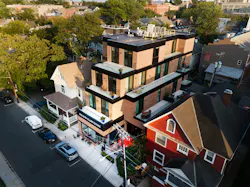
Indeed, location of a project to manufacturing facilities is “critical” to successful modular delivery, “as transportation costs can quickly erode modular’s financial benefits if the site is too far away from the factory,” says AO’s Magiati. She concedes as well that modular is not a one-size-fits-all solution, and that building teams need to understand how to leverage its advantages, which under the right circumstances can shorten construction schedules by up to 30%.
One of AO’s recent affordable housing projects is El Camino Real, a six-story building with 134 apartments in San Bruno, Calif., that Magiati says was designed for modular construction. AO was the Architect of Record on this project, which includes 1,800 sf of enclosed common space.
“Modular efficiency” that minimizes construction waste is one of the highlights of 330 Distel Circle, an affordable housing development that broke ground this summer in Los Altos, Calif. The building will have 88 income-restricted units, 22 of which are being set aside for formerly homeless individuals and families. 330 Distel “blends bold design innovation with deep community need,” says KTGY’s Ciammaichella. Its amenities include a second-story courtyard and garden, bike repair and storage, coworking spaces, and solar panels.
Suffolk’s Stanley says that one of his firm’s “most effective tools” to counteract rising construction delays and costs has been modular construction, “which reduces that amount of labor needed on-site, and helps speed up project timelines.” He points specifically to 18722 Sherman Way in Los Angeles, for which Suffolk used modular prefabrication to deliver 64 housing units. This process, says Stanley, enabled the assembly of the structure “in just weeks rather than months.”
7. Affordable housing more than just four walls
Perkins&Will’s Wortmann notes that market-rate housing typically allocates about 3% of its total area to amenities, compared to less than 1% for affordable housing projects. “Still,” he points out, the quality of shared spaces, like fitness centers and roof decks, “has improved significantly” across all multifamily housing types in recent years.
The amenities that affordable housing provides depend on the market and the income levels of residents. They also depend on how you define “affordable.”
Charles Bloszies, a San Francisco architect, sees “fewer or no amenities” being offered in affordable housing for very low-income renters. Contrarily, Suffolk’s Stanley doesn’t see much difference in the basic amenities between what’s affordable and what’s market-rate. “We want to provide safe, quality homes with features improve residents’ daily lives,“ he says. That includes efficient appliances, onsite laundry, reliable internet connectivity, and communal spaces for gathering.
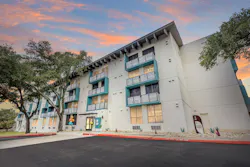
Suffolk this summer was in the closeout phase of 4611 Crenshaw Apartments, an affordable housing community in Los Angeles with 185 units, 22 of which for extremely low-income tenants. The project leverages the city’s Transit-Oriented Communities program, which encourages density near transit corridors. Another Suffolk project in L.A. called Evermont delivers 180 affordable units for lower-income seniors and families, with retail and public spaces.
Brianna Steiner, a Consultant-Advisory at HKS, notes that as more new communities are mixed income, it’s not uncommon for these neighborhoods to have fitness centers and clubhouses that all residents share. R.D. Olson’s Kettner Crossing development in San Diego features an open-air turf spot on the roof to promote mobility alongside a library and communal room to enhance socialization. Amenities “mostly come down to what the residents need,” says Wilhelm.
Summit’s Padgett adds that upfront and maintenance costs are going to preclude such amenities as private balconies and swimming pools from affordable housing. “But we’ve built several projects with what are considered market-rate features for affordable rental rates.”
One must-have amenity for affordable multifamily housing, agree AEC sources, is outdoor space. The Innovative Urban Village redevelopment project in East New York will include a central open space with a 9,500-sf playground. PAU Studio and SLCE Architects designed this community, which eventually will have nearly 2,000 units, as a series of mid-rise, double-loaded-corridor buildings with front stoops that echo the Brooklyn brownstone tradition of meeting your neighbors there.
“Outdoor space remains a key consideration,” say the Kimley-Horn executives. And because affordable housing often serves a wider range of age groups, passive recreational areas “can provide greater value than those found in market-rate communities,” they say.
Bafitis of RKTB Architects says that even if affordable housing offers nothing else, recreation and outdoor spaces are minimum requirements in his firm’s projects. “Affordable housing should be more than just four walls.”
No one is saying that affordable projects need lavish business amenities like conference centers. But they can offer residents a welcoming sense of community. Zinder of JZA+D sees encouraging signs in more developers of affordable and inclusionary housing asking for laundry rooms with lounges where tenants can interact.
And the lower the resident income level being targeted, the more likely the building’s amenities will encompass services like childcare and teen-focused areas. “Affordable housing typically is tailored to families, so affordable housing projects tend to have more children- and family-friendly amenities [like] activity rooms with indoor playsets, playgrounds, and grilling areas throughout the property,” observes MAA’s Hazard.
8. To lure workers, employers get involved in housing development
Among the positive trends Yardi Matrix sees in the affordable housing sector is greater direct employer involvement in development and/or financing.
While most of the AEC firms interviewed for this article haven’t seen evidence of this year, several thought such a trend would invariably benefit the market’s supply. “I personally haven’t seen it, but it is encouraging if it’s true,” says PAU’s Chakrabarti.
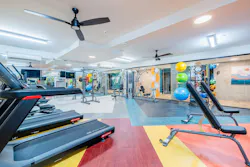
Cruz says he’s long argued that major corporations should invest in housing development to support local workforces, as some big tech companies in California have done. Such investment “could have a very positive impact on communities nationwide.”
Wilhelm of R.D. Olson Construction is already seeing this within the hospitality industry, “where affordable or workforce housing is a necessity.” Steiner of HKS says her firm has seen a growing number of employers “across nearly every sector” getting more involved in affordable housing development as a strategy to attract and retain workers. “Affordable housing has become a critical component of planning, often paired with carefully curated amenities tailored to the needs of the local workforce,” she says.
Steiner and Baron of HKS say this trend is prevalent in their firm’s work with academic medical centers and large health systems that are incorporating affordable housing and live-work-play environments into their master planning.
Several of Hord Caplan Macht’s workforce housing projects are in places like Hershey, Pa., Crested Butte, Colo., and Flagstaff, Ariz., where affordability “is a major challenge” for workers, say Thakkar and Shonaiya. HCM’s clients in such markets, which include school districts, resorts and leisure purveyors, and senior living providers, “have a need to provide affordable housing for their essential workers.”
They add that local government agencies are showing more interest in cultivating public-private partnerships for affordable housing development to attract low- and medium-income employees to fill job vacancies in currently high-rent areas.
9. Funding uncertainties drive P3 solutions
Last April, the Housing Authority of Bexar County, Texas, and the developer NRP Group broke ground on The Emma, an $85 million, 336-unit development that will serve income-eligible families and individuals earning between 30% and 70% of Bexar County’s area median income that, within those percentage ranges, would be approximately $30,000 to $69,000 for a family of four.
The Emma represents the San Antonio market’s first public-private partnership for affordable housing. The development, which is scheduled for completion in late 2026, will consist of three-story buildings, a fitness center, clubhouse, playground, and business center.
In its recent study titled “Redefining Public Delivery One P3 at a Time,” Jones Lang LaSalle found that the number of social infrastructure P3s more than doubled to 41 during 2022 to 2024 compared to 17 in 2019 to 2021. Workforce housing was among the building types that saw gains during this period.
Padgett of Summit Contracting Group notes that uncertainties in funding, interest rates, and construction costs make it more difficult for affordable housing projects to “pencil out.” That’s why, he says, affordable housing often requires public partnerships and tax incentives.
“There has been a noticeable rise in P3 deals involving local AHJs [Authorities Having Jurisdiction], with some instances where the AHJ retains ownership of the development,” say the executives at Kimley-Horn. They note the P3 approach can significantly enhance community support for an affordable housing project that might otherwise encounter NIMBY resistance. P3s also open opportunities for public funding.
Redevelopment projects seem to be attracting P3 interest. The Architectural Team (TAT) is working with MASS Design Group, the city of Boston, and the developer Preservation of Affordable Housing to transform the city’s West End Library into a new mixed-use complex with 119 apartments. TAT is also working with Boston’s St. Katherine Drexel Parish and the developers Planning Office for Urban Affairs and JGE Development to redevelop a large site adjacent to the Parish center into 185 mixed-income rental units and 32 affordable townhouses.
Perkins Square is a 12-block redevelopment in downtown Baltimore that replaces a housing community built in the 1940s. The redevelopment is part of a master plan that will feature 1,346 affordable and mixed-income units and 500 market-rate homes. The redevelopment “is not a governmental project but a public-private partnership featuring extensive community involvement at every stage and managed by a nonprofit company with significant levels of experience with making affordable housing work,” say HCM’s Thakkar and Shonaiya, whose firm that was involved in this project.
In San Diego, the affordable housing developer RAHD Group and Catholic Charities late July celebrated the rehab and preservation of Cerro Pueblo Apartments, consisting of 46 affordable senior housing units. These units were less than 30 days away from losing their affordability designation when RAHD intervened in the fall of 2022. This $17.7 million public-private project marked a significant step in protecting low-income seniors from this market’s housing shortages and inflation.
10. Wish lists focus on how projects could be streamlined
The next few years are expected to be challenging for creating more affordable housing. Yardi Matrix predicted that completions would contract significantly in 2027. Adler, its Vice President, estimated that at least 50,000 existing units are desperately in need of capital for improvements and upgrades.
If one word could capture how AEC firms foresee a brighter future for affordable housing construction, it would be “faster,” as in streamlining the entire machinery from design to approval and execution.
“We would like to see faster entitlement and permitting processes, streamlined utility approvals and increased sustainable funding for construction and operations,” says Swinerton’s Joubert, who echoes the sentiments of nearly all the AEC sources we interviewed for this article.
Their wish lists revolve around speed and regulatory reform. PAU’s Chakrabarti, for one, would like to see all housing projects under a certain threshold—say, 100 units—be designated as-of-right, meaning no further entitlements would be required for such construction. He also thinks that higher taxes should be levied on owners who bank land for surface parking and one-story structures, and lower taxes for those who build affordable multifamily housing near mass transit.
Getting approved for higher densities is always a struggle for affordable housing. “The biggest challenge relates to scale,” says Wortmann of P&W. He explains that affordable housing projects usually top out at around 100 units due to financing limitations and regulatory restrictions. Market-rate housing projects, on the other hand, can be two to three times denser, and often allow for ground-floor mixed-use options.
Henandez-Ayala wants zoning changes that are receptive to more affordable density near transit to promote mixed-use residential development; more flexibility in low-scale housing types in existing residential districts; and the formation of tax-allocation districts.
Hord Caplan Macht’s Thakkar and Shonaiya say support from local government and housing agencies is vital to creating affordable housing within their neighborhoods. “Changing zoning regulations to be more flexible or having the ability to easily change zoning for higher-density housing is important,” they state.
The future of affordable housing will hinge on developers’ ability to find the financing for projects, which AEC firms imply has been easier said than done because it typically derives from multiple, sometimes disparate sources. “We need to see legislation at the federal and state levels that will increase government funding for affordable housing projects,” says Bafitis of RKTB Architects. But in lieu of such uncertain support, Suffolk’s Stanley believes that more public-private partnerships and innovative collaborations “should be part of the solution.” One model his firm has seen work is when municipalities or public agencies contribute resources like land, reduced fees, or infrastructure support, and the private sector brings its development expertise.
Several of Cruz Companies’ projects—including the upcoming 135 and 145 Dudley and Nubian Square in Boston’s Roxbury neighborhood, and the recently completed Commons—incorporate for-sale and for-rent units. (Cruz thinks building wealth equity through homeownership should be a national priority.)
However, well-intended regulatory changes that allow for such combinations sometimes can be counterproductive. Zinder of JZA+D notes that in the past year New Jersey changed the size requirement for affordable units whose baseline is now larger than it is for market-rate. “This especially hurts the viability of inclusionary development projects [because] the market-rate units might actually have to be smaller than the affordable ones for the numbers to pencil out.”
This current requirement, cautions Zinder, “disincentivizes building affordable units.”