Antiquated to Connected. Same Hole, No Wires.
Key Highlights
- The Salto DBolt Touch replaces traditional deadbolts without door replacement, enabling easy upgrades during routine turnovers.
- Residents can use their smartphones, PIN codes, or smart cards to access their units, matching modern digital habits.
- The system integrates unit door access into the building's overall management platform, simplifying operations and enhancing security.
- Weather-rated outdoor versions ensure durability across various climates, maintaining consistent resident experience.
- This upgrade improves operational efficiency, reduces lockout incidents, and provides detailed access records for better security management.
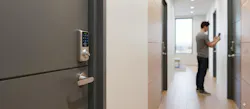

Picture a resident coming home on a weeknight. Her phone opens the garage gate. A tap at the lobby lets her in. She grabs a package from the smart locker, waves to the leasing office, and rides the elevator up. Then, at her own front door, she stops and digs through her bag for a metal key.
It’s a small moment, but it says a lot about where multifamily technology stands. Owners have spent a decade connecting the perimeter, the amenities, and the common areas. The unit door, the one opening every resident uses every day, often still runs on hardware designed a century ago.
Why the Front Door Came Last
There is no shortage of smart locks. Home improvement stores sell dozens of them. But a lock made for a single-family home is built for one owner and one app. It doesn’t talk to the building’s access system, and it gives a property team no way to manage hundreds of doors from one place. At scale, the convenience turns into a headache.
Commercial electronic locks solve that problem, but they have usually meant new door prep, sometimes new doors, and a capital project most owners would rather avoid. So the brass key stayed.
“Owners have connected everything around the unit,” says Preston Grutzmacher, Salto’s GTM Leader for Access Control Solutions in the Americas. “The unit door is where residents experience access control every single day, and it’s usually the last thing upgraded because nobody wants to replace the door to do it.”
Keep the Deadbolt, Change What It Can Do
The Salto DBolt Touch takes a different route. Instead of replacing the door, it replaces the deadbolt. The lock fits the existing door prep and needs no wiring, so a property can upgrade one unit at a time, often during a routine turn, with no construction and no downtime.
Many apartment doors use interconnected locksets, where one turn of the inside lever unlocks everything for a quick exit. The DBolt Touch IC keeps that same one-motion egress that residents and codes expect.
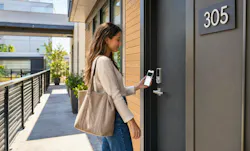
Not every unit door opens onto an interior hallway. Garden-style, townhome, walk-up, and build-to-rent communities often have unit doors that face the elements. For those properties, a weather-rated outdoor version of the DBolt Touch is built to handle subzero winters, desert summers, and driving rain, so residents get the same experience whether their front door opens onto a corridor or a courtyard.
It looks the part, too. Finishes that match existing hardware let the lock blend with the building’s design instead of standing out as a gadget.
The Phone Becomes the Key
For residents, the change shows up in their pocket. Mobile Wallet Credentials put the apartment key alongside their credit cards and boarding passes. They hold their phone to the lock and the door opens.
Residents who want other options still have them. A built-in keypad handles PIN codes for guests, dog walkers, and service providers, and smart key cards remain available for anyone who prefers something physical to carry.
“Residents already pay for coffee, board flights, and get into the office with their phones,” Grutzmacher says. “Their front door should work the same way.”
One System for Every Door
The bigger shift happens behind the scenes. The DBolt Touch runs on Salto’s access control platforms, so the unit door joins the same system as entrances, amenities, garages, and elevators. One credential carries a resident across the property. One interface lets the site team manage all of it.
That changes the daily work of running a building. A move-out no longer means a locksmith visit. A lost key becomes a canceled credential instead of a new cylinder. Vendors and maintenance staff get access only to the units and hours they need, and each lock keeps a record of who entered and when.
None of this trades security for convenience. The DBolt Touch earns the top AAA rating under the American National Standard for residential deadbolts.
“The lock is what residents see,” Grutzmacher says. “What the operator gets is a unit door that finally works inside the same system as every other door on the property.”
The Door That Defines Home
Renters judge a community by its everyday moments, and few are more personal than walking through their own front door. For owners, a connected unit door means faster turns, fewer lockouts, easier vendor access, and a clearer picture of who comes and goes.
The deadbolt has protected apartment homes for more than a century. Keeping it, and finally connecting it, may be the most practical upgrade an owner can make.