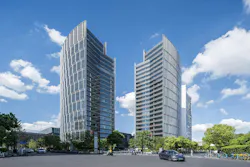
Shanghai’s former World Expo grounds transformed into mixed-use district
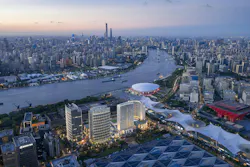
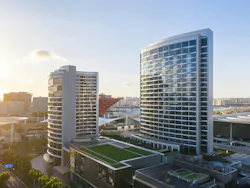
Work on Expo Place, on the site of the former 2010 Shanghai World Expo, was recently completed. The project transformed a once-fragmented landscape into a cohesive, human-scaled mixed-use district designed for everyday urban life.
Expo grounds had been left with abandoned infrastructure, half-built foundations, and unrealized development plans following the Expo that welcomed more than 73 million visitors.
Extensive below-grade structures originally intended for a single-use hotel development were retained and adaptively reused, forming the foundation for a diverse mixed-use program while significantly reducing demolition waste and embodied carbon.
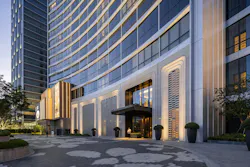
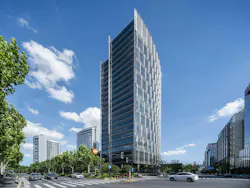
Above ground, the project integrates twin Class A office towers, boutique office villas, layered retail, and two hotels, including Asia’s first Thompson-branded property and a Mumian hotel. Below grade, direct connections link the district to active retail spaces and mass transit.
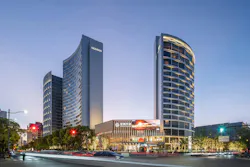
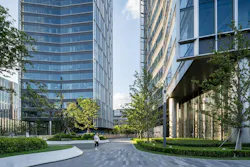
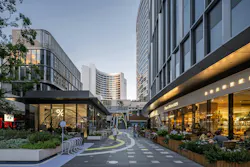
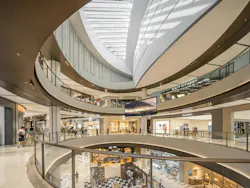
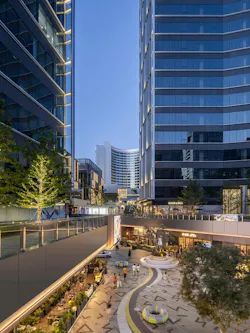
At the heart of the design is the creation of a contemporary town center that feels intimate, walkable and active day and night. Rejecting a monolithic mega-development aesthetic, each building is articulated with its own identity, while pedestrian streets, sunken plazas, and multilevel indoor-outdoor connections draw inspiration from the scale and spatial richness of traditional Shanghai alleyways.
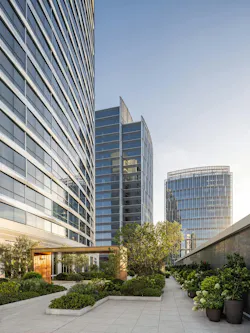
Landscape plays a central role throughout the district, from activated ground-level plazas to rooftop gardens and outdoor dining terraces that soften the architecture and strengthen connections to the riverfront beyond.
Vehicular circulation is pushed to the perimeter and separated across multiple levels, creating a protected pedestrian realm and ready access to public transportation.
Sustainability is embedded throughout the project. Adaptive reuse of existing infrastructure is complemented by extensive pedestrian networks, native planting, green roofs, and outdoor terraces that mitigate heat-island effects and enhance biodiversity.
Exterior sun-shading systems reduce solar heat gain while doubling as an architectural lighting feature at night, and operable windows promote natural ventilation.
“Our goal was to design a place where daily life unfolds naturally,” said Paul De Santis, Assoc. AIA, LEED AP, partner and design director at Goettsch Partners (GP). “Instead of a single mega-structure, we created a layered urban fabric—one that balances density with human scale, architecture with landscape, and private development with meaningful public space.”
Owner and/or developer: China Resources Land Limited (CR Land)
Design architect: Goettsch Partners
Architect of record: Institute of Shanghai Architectural Design & Research
MEP engineer: WSP
Structural engineer: Palmer and Turner Consultants (Shanghai)
General contractor/construction manager: Shanghai Construction Group Co., Ltd.