Coordinating Signage in Integrated, Sustainability-Minded Buildings
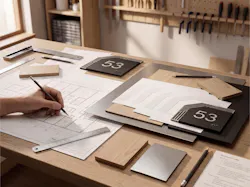
Powered by Oleh Tomilenko

Integrated design is the organizing principle behind most high-performance and green building projects. The roof, the envelope, the mechanical systems, the interior, and the site are developed together rather than in isolation, because that coordination is what produces a building that performs as a whole. Signage is rarely named in that conversation, but it follows the same logic: a sign package developed in coordination with the interior performs better and wastes less than one bolted on at the end.
For project teams working on certified or sustainability-focused buildings, this coordination has practical consequences for material selection, longevity, and the amount of material that ends up being replaced over the building's life.
Signage as a Small but Real Part of Material Strategy
Green building projects put considerable effort into material decisions: sourcing, durability, recyclability, and the environmental cost of replacement cycles. Interior signage sits inside that same framework, even if it is a small line item. A sign that has to be replaced every few years because it was specified without regard to its environment generates repeated manufacturing, shipping, and disposal. A sign specified to suit its location tends to stay in service longer.
Durability, in this sense, is a sustainability question. It is worth choosing signage materials the same way a team chooses other interior finishes: by matching the material to the conditions it will face, including cleaning regimes, humidity, and daylight exposure.

Late Selection Narrows the Options
A project gets the most out of custom door signs when room names, branding requirements, accessibility considerations, and mounting conditions are coordinated within a single specification, so the sign design aligns with both the interior concept and the operational use of each room. In a sustainability-minded project, that coordination adds a further benefit: it lets the team select materials and finishes that fit the building's environmental brief rather than defaulting to whatever is available at the end of the schedule.
Consider a project targeting a green certification, where interior materials are being screened for durability and low replacement frequency. If signage is left until after the interiors are complete, the team loses the chance to bring signs into that same screening process. The signs get sourced on a short timeline, often in whatever material and finish is quickest to obtain, and they fall outside the material logic that governs everything else in the space.
Engaging a signage manufacturer such as BSign while material options are still open is what keeps sign substrates and finishes inside that screening process. At the ordering stage the conversation narrows to what can be produced and delivered within the remaining schedule, which is a different question from what will perform longest in the conditions of each location.
Durability and Recyclability Are Separate Questions
Teams screening materials for a sustainability brief sometimes collapse two properties into one. Recyclability describes what happens to a material at the end of its life. Durability describes how long it takes to get there. A highly recyclable material still generates repeated manufacturing and transport if it is replaced every three years, while a long-lived material that is harder to recycle may carry a lower lifetime impact simply because it stays in place.
For interior signage, the second property usually dominates, because the quantities involved are small and the replacement cycle is the main variable a team can influence. That suggests a specific screening question for each sign location: given the cleaning regime, humidity, daylight exposure, and physical contact this sign will face, how long is it realistically going to stay in service? A sign in a frequently disinfected treatment room has a different answer than one in a dry, low-traffic administrative corridor, and the specification should reflect that difference rather than applying a single material choice across the whole building.

This is also where a project can avoid a common inconsistency. Interiors teams routinely apply this kind of condition-based reasoning to flooring, wall finishes, and hardware. Signage tends to escape it for a procedural reason: by the time the sign package is scoped, the screening process has already concluded.
Signage in the Context of Certification
For projects pursuing certifications such as LEED or WELL, material decisions are often documented and screened as part of the submission process. Interior signage is a small enough category that it rarely drives a credit on its own, but it sits within the same material philosophy that governs the rest of the project. A team that has committed to durable, responsibly chosen interior materials has a natural reason to extend that thinking to the signs on the doors rather than treating them as an exception sourced outside the material framework.
There is also an operational dimension. Buildings pursuing high-performance goals typically plan for long service lives and low maintenance burdens. Signage that has to be replaced frequently runs counter to that intent. A sign specified to last, in a material suited to its environment, aligns with the same long-horizon thinking that shapes decisions about envelopes, systems, and finishes. The scale is smaller, but the logic is identical.
Bringing Signage Into the Integrated Process
For teams that already practice integrated design, folding signage into the workflow is a modest addition. During the interior design phase, the office door signs and the rest of the signage package can be reviewed alongside the finish schedule: What are the room functions? What are the mounting surfaces? What accessibility requirements apply? What cleaning and environmental conditions will each sign face? Answering these questions while material options are still open lets the team specify signs that align with the building's design intent and its sustainability goals at the same time.
For a project already past that phase, there is still a useful check available before the signage order goes out. Take the signage schedule and mark every location where the sign will face frequent cleaning, high humidity, direct daylight, or regular physical contact. Those entries are where a material chosen on appearance alone is most likely to fail early, and they are worth re-specifying against the same durability criteria the project applied to its other interior finishes. It is a short exercise, and it catches the replacements that would otherwise show up three years into occupancy.