Building a skilled trades workforce: Strategies for modern construction success

This blog post was authored by Caroline Stratos, Communication Specialist, Southland Industries.
Building and keeping a skilled trades workforce requires collaboration across industry, education, and labor. Effective efforts create clear pathways, accessible resources, and respected careers, while communicating real outcomes and the value of paid, on-the-job learning.
Strong skilled trades workforce development depends on aligning training pathways with employer needs and expanding access to skills development programs that deliver measurable results.
A strong trades workforce relies on field and shop experts who deliver safe, reliable systems. That strength grows by investing in people through training, apprenticeships, and overall support. When apprenticeships are paired with sustainability efforts and safety, leadership, and technology modules, workers gain confidence and advance from entry-level to journey-level roles.
Trade apprenticeship programs integrated with skilled trades training programs create stackable credentials that support long-term career mobility and reinforce skilled trades workforce development across regions.
Improving training and workforce development efforts
Modern construction demands continuous upskilling, sustainability, and process innovation. Aligning training with evolving project needs means blending classroom instruction and hands-on and jobsite experience to accelerate mastery. Skills development programs that combine theory with practice ensure workers can apply new concepts immediately on site.
To meet rising demand, the trades must recruit widely, expanding training and scaling workforce programs. Coordinating apprenticeships with targeted skill-building gives learners paid experience plus the technical proficiency employers need. Trade apprenticeship programs linked to skills development programs help standardize competencies and speed advancement, while skilled trades training must keep up with emerging technologies.

Partnerships with local unions strengthen the talent pipeline. Union programs offer robust apprenticeships, competitive wages and benefits, and training that includes safety, supervision, and emerging technologies. These collaborations often align skilled trades training programs and trade apprenticeship programs to ensure consistent outcomes across contractors and projects.
Addressing the skilled labor shortage
Solving the trades labor shortage requires ongoing, collaborative action:
Promoting construction through hands-on training and skill development
Hands-on learning sparks interest and clarifies pathways. Exposure in high school through pre-apprenticeship, training events, and apprenticeships builds practical skills and connects students to industry mentors. Embedding these efforts in broader initiatives sustains momentum from classroom to jobsite. Coordinated skills development programs create early wins and support transition into trade apprenticeship programs.
We need to remove barriers and make it easier for individuals to gain hands-on experience and certifications in sustainable construction practices. Partnerships between companies and training programs are essential for ensuring workers are equipped with the necessary skills.
- Henry Nutt III, Business Development Executive, Sounthland Industries
Tony Lowe, Detailing Manager, adds, "There are career path opportunities outside a traditional college degree. I love seeing someone's eyes light up when they hear about a different way to go for a career."
Using innovative technology as a recruiting effort
Technologies like virtual modeling, robotics, automated fabrication, and AI attract talent and boost efficiency. Integrating digital layout, simulation, and AI into apprenticeships accelerates learning and accuracy. Skills development programs that teach these tools alongside core craft competencies help modernize skilled trades workforce development and improve retention.
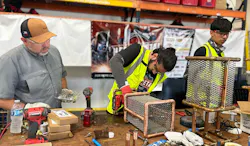
Autonomous layout can print full-scale models far faster than manual methods—improving safety, cost, and schedules. On the topic of AI in construction, Curtis Harbour, Vice President of Labor Relations, says, "AI's true power lies in refining design documents, filling gaps, solving critical issues, and improving schedule logic ... we are only scratching the surface."
Investing in early-career mentorship, networking, and opportunities for at-risk communities
Mentorship, especially for first-generation apprentices, improves progress and retention. Linking mentorship to training provides guidance on safety, productivity, and professionalism. When mentorship is embedded in skilled trades training programs and trade apprenticeship programs, new entrants gain confidence and clearer advancement goals.
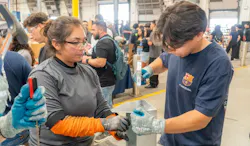
The next generation of skilled trades professionals should be able to take advantage of growth across the MEP industry and beyond. By investing in workforce development initiatives, community partnerships, recruitment strategies, and overall support for apprentices and other early-career individuals—through trade apprenticeship programs, skilled trades training programs, and focused skills development programs—we are shaping the future of our workforce, our innovations, and our leaders in the field and shop.
Ultimately, sustained skilled trades workforce development depends on aligning trade apprenticeship programs with industry-driven skills development programs to deliver long-term career mobility and economic impact.
About the Author
Southland Industries
As an MEP building systems expert, Southland Industries provides integrated, full lifecycle solutions that optimize the design, construction, operation, and efficiency of buildings. Through collaborative client partnerships and our collective expertise, we create premier built environments. Follow us on LinkedIn, Instagram, and Facebook.