Designing for human connection in a digital age
Artificial intelligence, automation, and digital technologies are rapidly transforming how people work, communicate, and spend their time. The 2026 Stanford AI Index Report captures this rapid pace of adoption, noting that AI has moved from an emerging technology to an increasingly common part of daily life, business operations, and decision-making.
As our world becomes increasingly digital, something interesting is happening: People are placing even greater value on experiences that feel authentic, local, and human. The World Health Organization’s Commission on Social Connection has identified social connection as an important public health issue. The American Psychiatric Association’s 2026 Healthy Minds Poll found that 42% of U.S. adults experience loneliness at least once a week, including 16% who experience loneliness every day.
Those statistics aren't just a wellness challenge. They're a design opportunity.
For architects, developers, and planners, the question isn't whether technology will continue transforming the built environment. It will. The real question is how we create places where neighbors become familiar faces, everyday routines spark conversation, and people feel like they're part of something bigger than themselves.
Historically, design conversations have focused on access, efficiency, density, convenience, and amenity counts. Those priorities still matter, but today's residents are looking for something more. They're choosing communities that support connections, encourage healthy lifestyles, and create a genuine sense of belonging.
The Rise of Social Infrastructure
A concept gaining attention across planning and development is social infrastructure. Coined by sociologist Eric Klinenberg, the term refers to the physical places that support social interaction and community engagement. Unlike roads, utilities, and transportation systems, social infrastructure focuses on the environments where people gather, participate, and build relationships over time.
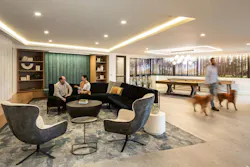
In multifamily and mixed-use communities, those places can take many forms: shared courtyards, community gardens, walking paths, outdoor kitchens, flexible club rooms, neighborhood plazas, dog parks, and activated ground-floor spaces.
We often call them amenities.
Residents remember them because of the experiences they create. A neighbor you always run into while walking the dog. A fire pit that becomes the unofficial gathering place after work. A community garden where someone shares fresh herbs with a neighbor they've just met.
Thoughtful design creates natural opportunities for residents to connect.
The most successful communities aren't defined by a single signature amenity. They're supported by a network of spaces that encourage both planned and spontaneous interaction, where small moments gradually become meaningful relationships.
Why Site Planning Matters More Than Ever
Designing a community requires more than adding amenities. It requires careful planning of the spaces between them.
Site planning plays an important role in shaping opportunities for interaction. Building placement, pedestrian circulation, public-private transitions, and the relationship between indoor and outdoor environments all influence how people experience a community. Coordinating architecture and interiors early in the design process helps reinforce these opportunities for connection.
A courtyard people naturally walk through every day will almost always outperform one tucked behind a building. A coffee bar adjacent to package lockers may create more conversations than one hidden inside a resident lounge. Sometimes moving a bench, widening a pathway, or connecting a walking trail to a community green can have a greater impact than adding another programmed space.
The best communities make interaction feel natural.
Designing the Spaces Between Buildings
Some of the most important community spaces may not be destinations themselves, but places people move through every day.
Walkways, front porches, shared greens, outdoor seating areas, and transitional spaces between public and private environments can all contribute to a stronger sense of community. These spaces create opportunities for brief conversations, chance encounters, and informal interactions that help build familiarity over time.
In mixed-use developments, these connections are becoming even more important. Residents, visitors, employees, and local businesses all contribute to the daily rhythm of a place. Well-integrated public realms help support those interactions while strengthening residents’ sense of identity and belonging.
As communities continue prioritizing walkability and wellness, these spaces are becoming just as important as the destinations themselves.
Planning for Multiple Generations
Today's communities serve people with different lifestyles, schedules, and expectations. Young professionals, families, retirees, and seniors all use shared spaces differently.
The most successful amenities recognize that flexibility matters.
A community room can host a resident meeting one evening, a birthday party the next, and a book club over the weekend. An outdoor lawn might become a yoga class, a food truck gathering, or simply a place to read in the afternoon sun.
The less we prescribe exactly how spaces should be used; the more opportunities residents have to make them their own.
Community as a Development Outcome
Designing for connection means recognizing how digital and physical experiences can complement one another. Technology continues to improve communication, simplify building operations, and enhance everyday experiences. But no app or algorithm can replace a spontaneous conversation, a familiar face, or the sense of belonging that comes from sharing a place with others.
The opportunity is to design communities where digital convenience supports human connection.
As AI and emerging technologies become more deeply woven into daily life, the places where we live, work, and gather will matter even more. The communities that stand out won't necessarily be remembered for the flashiest amenity package. They'll be remembered because they made connection feel natural—through welcoming spaces, everyday moments, and opportunities to engage with the people around us.
In an increasingly digital world, that sense of belonging may become one of the most valuable amenities we can design.
About the Author
Kelsey Loverro is a Senior Associate and Interiors Project Manager at LRS Architects, where she designs multifamily and mixed-use environments that support connection, community, and resident well-being. She can be reached at [email protected].