The evolving role of roofing under LEED v5: Key shifts architects and designers must address
LEED serves as the global framework for green building design, guiding architects and designers to deliver improved environmental performance through certification. As sustainability priorities evolve, LEED continues to adapt, regularly updating its rating system to uphold best practices for environmentally responsible building design.
With the current LEED v4 and v4.1 registrations sunsetting on June 30, 2027, the transition to LEED v5 marks a shift from relying on documentation to measurable, proven performance in order to earn points.
Fortunately for builders and architects needing to understand roofing considerations for LEED v5, Elevate, a brand of commercial roofing systems and part of the Amrize family of brands, has released a Credit Guide to simplify the process and help project teams identify roofing strategies and solutions that support LEED v5 outcomes.
How LEED v5 Categories Influence Roofing Specification
Under this new rating system, roof systems and the building envelope are no longer secondary considerations, but are evaluated at the beginning of design planning conversations. The new model emphasizes three impact goals: climate action through decarbonization, quality of life, and ecological conservation and restoration.
Roofing now plays a direct role in achieving these objectives, becoming not just a protective layer but a critical player in decarbonization, energy efficiency, and resilience planning for architects and designers seeking LEED v5 alignment.
These shifts extend across LEED v5’s credit categories, each of which reshapes how roofing influences certification outcomes under the new standards.
Integrative Process: Roofing Must Be Part of Early Planning
In LEED v5’s shift from v4, projects are required to include mandatory carbon modeling and assessments, with roofing integrated into early planning decisions. Unlike prior rating systems, teams must now measure and evaluate carbon impact with embodied carbon assessments.
With this, material transparency and high global warming potential (GWP) comparisons are crucial to incorporate at the start of design planning. Roofing assemblies directly affect embodied carbon and long-term building performance, making early evaluation essential for compliance with LEED v5 guidelines.
Sustainable Sites: Supporting Site Performance and Resilience
How buildings interact with their environment is important under the Sustainable Sites category. The built environment is essential for strengthening relationships among biodiversity, stormwater management, and climate, informing building design decisions that meet the demands of local and regional ecosystems. Roofing design plays a direct role in sustainable site performance outcomes.
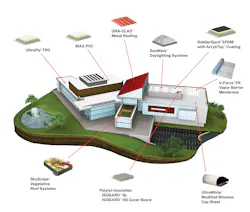
Accounting for various roofing assemblies can support strategies for heat-island reduction, rainwater management, and resilient performance throughout a building's life. Reflective roofing systems reduce heat island effects and help maintain cooler surface temperatures, particularly in warmer climates. Vegetative roofs are another option to consider to support stormwater management, reduce runoff, and promote biodiversity.
By accounting for climate risks, resilient roofing systems protect people and property in regions vulnerable to extreme weather conditions. When considered early in the design process, these systems strengthen durability and decrease environmental impact.
Water Efficiency: Managing Stormwater from the Top Down
Water efficiency is another element where roofing decisions can influence larger sustainability goals. LEED v5 treats water as a limited resource, promoting an approach that reduces water consumption throughout the building. This includes emphasizing alternative water sources, leak detection, decarbonization through reduced energy use in water systems, and lowering the energy and carbon required to treat and distribute water.
Employing methods to enhance water and energy efficiency is supported under LEED v5, where the following roofing assemblies can play a meaningful role in advancing these goals:
- Vegetative roofing systems absorb and retain rainfall, reducing irrigation demand and slow stormwater discharge into municipal systems.
- Waterproofing assemblies protect the building from moisture intrusion, supporting its longevity and preventing material damage that could require additional resources or repairs.
- Drainage systems reduce uncontrolled rainwater runoff, helping direct rainwater away from the building to prevent excess water.
Energy & Atmosphere: Envelope Performance Drives Energy Results
LEED v5 aims to guide projects during design and construction toward reducing or eliminating operational carbon emissions. Three critical steps that shape this decarbonization effort are electrification, reduced peak thermal loads, and energy efficiency.
High-functioning roof assemblies, including reflective membranes, high R-value insulation, and airtight detailing, contribute to lower energy use and delaying peak demand. When implemented, these design decisions help lower operational carbon. Building envelope designs are capable of supporting renewable energy sources to reduce environmental impacts and increase the supply of renewable energy within the electrical grid.
Within the Energy & Atmosphere credit category, roofing systems and building envelopes can support renewable energy systems and the transition toward a lower-carbon grid.
Materials & Resources: Transparency and Carbon Accountability
Materials & Resources category focuses on reducing embodied carbon that supports a circular economy by promoting material efficiency, reuse, and reduced resource extraction—while also lowering lifecycle emissions that impact the environment. To lower embodied carbon in infrastructure, building professionals must consider low-carbon materials for roofing systems and building envelopes to carefully quantify carbon impacts rather than rely on estimated performance.
Extending replacement cycles reduces material waste, resources and supports long-term performance, creating a more environmentally friendly solution. Environmental Product Declarations (EPDs) provide the data needed to compare embodied carbon and guide responsible material selection. Durable and recyclable roofing systems backed by EPDs are essential to achieving the goal of reducing environmental impacts. These roofing decisions work in conjunction to consider immediate impacts and long-term lifecycle impacts.
Indoor Environmental Quality: Comfort Starts at the Roof
Enhancing indoor quality is a growing emphasis under the updated standard to support occupant health, comfort, and overall well-being. The new framework, including considerations for air quality, also supports thermal stability, daylight access, accessibility, and resilient indoor environments. Roof systems help earn credits in this category, including airtight assemblies, coordinated detailing, and vegetative systems.
Airtight assemblies help maintain stable interior temperatures and limit unwanted air infiltration, supporting thermal comfort and indoor air quality. To prevent compromising occupant comfort through moisture intrusion, drafts, and long-term performance issues, coordinated detailing can be integrated. Vegetative roofs can also elevate occupant experience through strengthening connections to nature while improving the surrounding environment.
Roofing systems and building envelope materials not only strengthen energy performance but also enhance the overall well-being of occupants, a key consideration for the Indoor Environmental Quality category.
Project Priorities: Designing for Regional Climate and Resilience
Encouraging design decisions that meet local environmental and climate needs is a greater emphasis under this category to assess regional impact and site-specific performance. Roofing design plays a critical role in meeting these objectives.
In regions with extreme heat, reflective roofing systems can help mitigate heat gain. While in areas with heavy rainfall, durable waterproofing and drainage systems are essential. Assemblies that can withstand high winds or wildfire risks are needed to support building resilience and long-term durability.
Solutions that meet the regional climate needs of local areas, not just certification minimums, are rewarded under this category with the highest local impact.
Case Study: Salt Lake City Facility
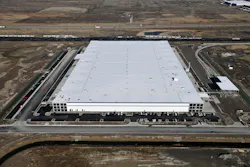
The Elevate Manufacturing and Distribution Center in Salt Lake City, Utah, certified under LEED, demonstrates how an integrated roofing strategy can support the performance priorities emphasized in the updated rating system. Spanning approximately 650,000 sf, the facility incorporates a high-performance roof system featuring Elevate UltraPly TPO membrane, ISOGARD polyiso insulation, and SunWave skylights.
The reflective TPO membrane and high-R-value insulation support Energy & Atmosphere goals by reducing thermal transfer and lowering peak loads, with the membrane’s high reflectivity helping mitigate heat island effect. Integrated daylighting reduces lighting demand while improving occupant comfort.
Membrane, insulation, and daylighting systems work together to contribute to LEED v5 targets of long-term energy efficiency, durability, and sustainable performance. The Elevate manufacturing facility illustrates how effective roofing systems can advance key LEED performance goals across multiple credit categories.
Roofing Now Plays an Integral Part
LEED v5 prioritizes measurable results for certification requirements, raising expectations for green buildings to meet the growing demands of climate action, health equity, and inclusivity. By incorporating building materials aligned with sustainability priorities, roofing systems are more important than before for attaining goals under the new framework, including carbon reduction, energy performance, water management, and occupant comfort, among other key considerations.
To effectively comply with these updated requirements, project teams must integrate roofing strategy early in the planning process. Early coordination ensures that roofing system decisions align with carbon modeling, resilience assessments, and energy performance targets before buildings are complete, to reduce the risk of costly redesigns and missed certification opportunities later in the project.
For designers and architects navigating these transitions, the Elevate LEED v5 Credit Guide serves as a resource to align roofing decisions with resilient, performance-driven design goals under the new LEED v5 framework.