New sawdust material could compete with cement-bonded particle board
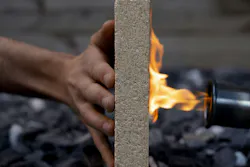
Researchers at the Chair of Wood Materials Science at ETH Zurich and Empa have developed a process that can convert sawdust into a recyclable and environmentally friendly composite using the mineral struvite.
The material could be used to create products with the desirable properties of cement-bonded particle boards in a lighter form with a smaller carbon footprint. The process uses an enzyme extracted from watermelon seeds to control the crystallization of struvite from an aqueous suspension of the mineral precursor Newberyite.
The process creates large crystals that fill the cavities between sawdust particles and firmly bind them together. The new material’s mechanical properties and excellent fire resistance make it particularly suitable for internal fittings, researchers say.
Initial estimates have shown that the material could achieve the same fire protection class as conventional cement-bonded particleboards, although larger-scale flame retardancy tests are still required for confirmation.
Cement-bonded particleboards contain 60% to 70% cement by weight, making them heavy and giving them a poor carbon footprint due to the energy involved in cement production.
The struvite sawdust board contains just 40% binder, making it significantly lighter. The new material is also easily recyclable, unlike cement board.
Struvite is relatively expensive compared to polymer binders or cement, but there is a potential cheap source for the mineral. Struvite accumulates in large quantities in sewage treatment plants and could be extracted from these facilities.