Cold-formed steel vs. wood framing for multifamily: one structural engineer's take on this material debate
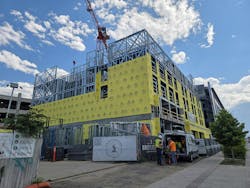
In the evolving landscape of multifamily construction, the conversation around structural framing, specifically the use of cold-formed steel (CFS) versus traditional wood framing, is more relevant than ever. Whether you’re an owner, architect, or general contractor, choosing the right system is more than just a structural integrity decision.
The cost, long-term value, code compliance, schedule, labor, and sustainability considerations are all factors. It’s important to understand the drivers behind the choice, how construction priorities have shifted over the decades, and why the wood vs. cold-formed steel discussion must be had at the earliest stages of project development.
At its core, the decision between cold-formed steel and wood comes down to project requirements and priorities. These priorities include speed of delivery, construction cost, height and density goals, labor availability, design adaptability, durability and risk mitigation
This discussion is important so that the owner, architect, and contractor can make the correct decision based on what's ideal for their building. It’s not just from a technical standpoint, but from a functional and financial one.
Historically, wood framing has dominated mid-rise multifamily construction. This is especially true for buildings five stories or under. Wood's low upfront cost and familiarity within the trades made it the go-to material for decades. In the 1970s and 80s, wood-framed walk-up apartments were standard in suburban development.
Over time, developers started to add retail or parking podiums below residential units, driving demand for podium construction: typically concrete on the lower floors with up to five stories of wood above. Building codes evolved to allow this hybrid format, pushing wood construction into urban areas while still maintaining a budget-friendly profile.
Meanwhile, cold-formed steel, though introduced in the late 1990s, gained significant traction in the 2010s. As demand for denser, taller, and more durable structures increased, developers began leaning into cold-formed steel for its superior height capabilities and fire performance.
In certain places where land was becoming a premium and demand for housing skyrocketed, developers needed to go taller. Cold form allowed them to increase rentable square footage without moving to full-blown concrete or hot-rolled steel construction.
Cost, Labor, Speed and Durability
Today’s construction climate is shaped by a few key factors including costs, labor and speed to market. The Covid-19 pandemic highlighted just how volatile wood prices could be. At one point, dimensional lumber and cold-formed steel were almost price equivalent. Developers who had historically chosen wood purely for cost began reconsidering steel as a viable alternative.
Concerning labor availability, there’s a growing shortage of skilled carpenters. This is a significant factor. Wood framing is forgiving, but it relies on experienced labor. Cold-formed steel, on the other hand, is often more standardized and less susceptible to field mistakes if it's panelized.
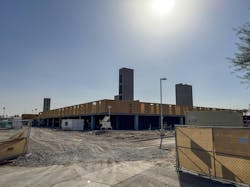
Furthermore, cold-formed steel is often panelized off-site, leading to faster installation times and fewer jobsite errors. While traditionally wood had an edge in adaptability, it’s now starting to catch up through prefabricated wall panels and off-site assembly.
Cold-formed steel doesn’t warp, shrink, or degrade the way wood does. It’s more resilient to weather exposure during construction, and more resistant to pests, fire, and water damage. From an insurance standpoint, it’s considered less risky, which some developers view as a premium feature. Wood is an organic material. It swells when it gets wet, shrinks when it dries, and creaks as it settles. Cold-formed steel offers a tighter, more predictable structure.
Materials Influenced Each Other
Interestingly, both materials have started adopting the benefits of the other. CFS manufacturers led the way in off-site panelization, with companies delivering cold-formed wall and floor assemblies ready for quick installation. In response, wood construction has increasingly moved toward panelized systems, improving quality control and construction timelines.
At the same time, the wood industry has pushed innovation with mass timber solutions like CLT (cross-laminated timber) and glulam. These engineered products allow wood to be used in taller, more complex structures while offering an aesthetic and sustainable edge.
There’s a strange marriage happening. Wood and steel are starting to mimic each other. Wood is becoming more precise and prefab-focused. Cold form is trying to be more flexible and adaptable in the field.
Perception
In recent years, cold-formed steel has developed a reputation for being a “premium” construction material. It’s typically used by larger general contractors and associated with higher-end urban multifamily projects. There’s a perception that cold-formed buildings are more upscale. Insurance rates are often lower, and the material is seen as more durable and long-lasting.
That perception isn’t baseless. CFS is more uniform, dimensionally stable, and better suited for BIM coordination and tight MEP tolerances. However, with mass timber now entering the arena, wood may once again be viewed as a high-end solution.
Sustainability
In today’s design conversations, sustainability is no longer a footnote. It’s a requirement.
Both wood and cold-formed steel are seen as more sustainable alternatives to concrete. Wood is a renewable resource and often championed for its low embodied carbon. Steel, while energy-intensive to produce, is highly recyclable and lends itself well to zero-waste construction processes.
Interestingly, new hybrid systems are emerging that combine the best of both worlds. These systems use cold-formed steel bearing walls with mass timber floors, or steel podiums supporting CLT superstructures. This allows developers to meet height, cost, and sustainability goals without sacrificing performance.
Ask Questions Early
When deciding between wood and cold-formed steel, project teams should ask some basic questions that run along the lines of:
- How tall does the building need to be?
- What kind of speed and labor efficiency is required?
- Are we in a region prone to seismic activity, fire risk, or harsh climates?
- Is the market positioning calling for “luxury” or “cost-effective” units?
- What sustainability goals are in play?
- What insurance considerations or long-term durability concerns exist?
It has to be a conversation at the beginning of the project. Once you’ve gone down a design path, it’s very hard to backtrack.
The debate between cold-formed steel and wood isn't about which material is better. It’s about which is better for your specific project’s needs. In a construction climate where timelines are tight, labor is scarce, and expectations are high, the smart play is open and honest communication.
With both materials evolving and even blending in hybrid applications, design teams now have more options to deliver buildings that are structurally sound, cost-effective, and ready to last.
About the Author
Goonsung Park, PE, is a Senior Project Engineer at S. A. Miro, Inc., a consulting engineering firm providing structural and civil engineering to public and private sector clients. The firm offers responsive, personalized service by combining depth of engineering experience, top-flight technical skills, and a proven record of interaction and response.
Since 1980, S. A. Miro has maintained a successful presence in the Rocky Mountain Region and is currently ranked among the leading structural / civil engineering firms based in Colorado.