The front door effect: Why entry design matters in pediatric healing
This blog post was authored by Emily Bagdatli, Experience Practice Leader, Creative, NBBJ; and Brandon Sampson, Senior Associate, Design Leader, Design Computation Leader, NBBJ.
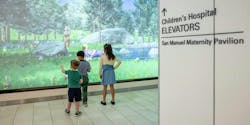
For kids, even routine clinic visits can feel intimidating. Bright lights. Strange sounds. Unfamiliar faces. For pediatric patients with more serious conditions, hospital visits can be a major stressor, with up to 30% of them experiencing PTSD. First impressions—of people or places—play an outsized role in either pushing kids towards anxiety and negative feelings or towards trust. Yet too often the design of critical “first impression” spaces like pediatric entry and waiting areas is centered on distraction. The best-designed pediatric care environments do more than entertain—they invite curiosity, promote agency and enable kids to explore.
First impressions matter most in healthcare—and for children, the entry experience can be pivotal. The entry and common areas are the first thing kids see and the place they spend time trying to acclimate to their new surroundings. Waiting and wondering what comes next. Design that creates a sense of calm but also lets kids be kids—engaging their imagination, moving their bodies and providing a sense of new possibility— is critical to reducing stress in these moments.

Below, we explore four ideas on how entry and waiting area design can help kids be kids by looking at the UCSF Stad Center, a pediatric center for pain, palliative care and integrative medicine, Loma Land, an interactive environment at Loma Linda University Children’s Hospital, The Hassenfeld Children’s Hospital at NYU Langone and the Montage Health Ohana Center for Child and Adolescent Behavioral Health.
Make the Common Uncommon
Anyone who remembers playing "the floor is lava" knows that kids’ imaginations can turn an ordinary setting into something extraordinary. So why can’t design do the same and repurpose common elements to transport kids to an accessible, yet magical place?
Cultivate Curiosity
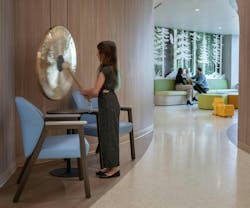
Attention is a superpower, and if focused in a positive direction it can dramatically reduce stress. Pediatric welcome and entrance spaces can be designed to draw kids in—make them curious about what they’re seeing and how they can interact with it.
Reward Exploration
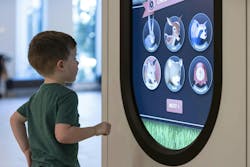
Kids love to explore—and exploration thrives when things unfold over time. By embedding "Easter eggs" within an environment, creating changing interactive experiences, and rewarding kids’ curiosity with new experiences, pediatric settings can be more immersive and calming.
Empower Agency
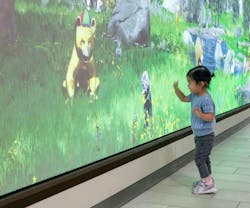
A visit to the doctor can be intimidating—for kids in particular—in part because of lost agency: patients are told where to sit and left to wait until a caregiver can see them. Conversely, providing a sense of control over one’s environment can reduce stress and set kids’ minds at ease by providing interactive elements and a range of diverse settings to choose from.
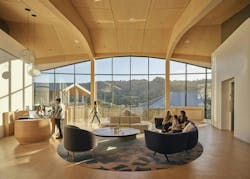
The experience of care begins at the front door. When entry spaces spark curiosity and give kids a sense of choice, they turn fear into trust. Thoughtful design can transform uncertainty into wonder—opening the door to healing before care even begins.
About the Author
NBBJ
NBBJ creates innovative places and experiences for organizations worldwide, and designs environments, communities, and buildings that enhance people’s lives. Founded in 1943, NBBJ is an industry leader in healthcare and corporate facilities and has a strong presence in the commercial, civic, science, education and sports markets. To view all of NBBJ’s ideas, visit our website or follow us on Facebook, LinkedIn, Twitter