Designing leadership: Lessons from HKS’s CEO transition for firms navigating industry transformation
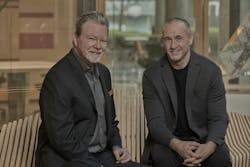
In the AEC industry, outcomes are rarely left to chance. We design, test and refine complex systems every day. When it comes to leadership transitions, we should take a similar approach.
Over the last two years, HKS guided our CEO transition with a level of intentionality that mirrored how we think about our work: with a clear, united focus on purpose, character and relationships. At the same time, our industry is being reshaped by forces well beyond traditional practice—from artificial intelligence, climate shift and energy challenges to new delivery models and evolving talent expectations. Therefore, our transition needed to prepare HKS for its next chapter, not simply its next leader.
Here are a few lessons from our experience that we’d like to share for anyone finding themselves in a similar transition.
Treat Succession as a Leadership System
One thing we wanted to avoid is viewing succession as something that begins when a leader announces a departure. For us, succession was embedded into leadership development years before any transition was imminent.
Two years ago, HKS launched a firmwide leadership development program designed to strengthen the firm’s global leadership pipeline, bringing together more than 100 leaders from across practices and geographies. The curriculum emphasized the qualities most critical during periods of rapid change—emotional intelligence, clear communication and sound decision-making.
From that broader leadership cohort, we assessed readiness for leadership roles across the firm using structured behavioral assessments, performance data and qualitative insight. The same disciplined approach informed decisions at every level, including the selection of potential CEO successors, reducing bias and strengthening rigor across the process.
Takeaway for other firms: Build succession into leadership development early. A strong pipeline builds leadership capacity at every level of the organization.
Design the Transition Experience
Once a successor is identified, we did not rush to the finish line.
When we selected Heath May as our next CEO, we intentionally designed a year-long transition period. That time was used to shadow key responsibilities, co-lead board and firmwide strategic meetings and work closely with firm leadership to understand not just the role, but the rhythm of the organization from the perspective of the CEO.
Just as important, we held joint town halls and visited offices together to discuss the transition. We talked candidly about what would remain consistent and what would evolve. That transparency mattered. Even well-planned transitions can create anxiety, particularly amid broader industry disruption.
Takeaway for other firms: A gradual, visible transition builds trust. People don’t fear change as much as they fear uncertainty.
Anchor Culture as the Constant
One of the most common concerns during leadership transitions is cultural drift. At HKS, culture was the constant we were most committed to protecting, even as the firm continued to evolve.
As Peter Drucker famously said, “Culture eats strategy for breakfast.” We’ve seen that play out repeatedly in our industry. Strategies change. Markets shift. But culture shapes how decisions are made when conditions are uncertain.
Our approach was to be explicit about what endures—our values, collaborative ethos and commitment to design excellence—while creating space for new energy and perspective. Mentorship between outgoing and incoming leadership was essential to this balance, allowing continuity without complacency.
For firms with decentralized models, multiple practices or global footprints, this clarity matters even more. Clarity around culture helps teams make aligned decisions when they’re operating across practices and time zones.
Takeaway for other firms: Cultural continuity isn’t about preserving the past. It’s about clearly articulating what matters most and empowering the next generation to build on it.
Select Leaders for What’s Next
AEC leadership today requires a broader lens than ever before. An industry once defined primarily by individual is now shaped by interconnected ecosystems where community-scale impacts, rapidly evolving technology and complex socioeconomic and climate forces influence how we design and deliver.
As a result, leading a firm today requires the ability to guide transformation—integrating new tools, evolving how we work and partnering with clients to redefine value as expectations continue to change. For us, that meant selecting a leader who holds design as the firm’s North Star, while bringing the human insight and technological fluency needed to lead in a rapidly changing industry.
Takeaway for other firms: Succession decisions should be grounded in future conditions. Define the capabilities your next leader will need to lead the firm forward and position it for long-term resilience.
Apply Design Thinking to Your Own Business
Perhaps the most important lesson is this: leadership transitions deserve the same discipline we apply to our work.
We prototyped. We tested assumptions. We adjusted. We focused on the human experience of change, not just the organizational chart. That mindset turned a potentially disruptive moment into one of momentum.
For an industry built on solving complex problems, this should feel familiar.
Takeaway for other firms: Treat leadership evolution as a designed process, not an administrative task.
Looking ahead
CEO turnover across industries is at a five-year high. In AEC, the pace of change continues to accelerate, reshaping how firms operate and deliver value. Leadership expectations are rising accordingly.
Our experience reinforced a simple belief: how a firm leads matters as much as what it designs. When leadership evolution is intentional, transparent and future-focused, it strengthens culture, builds confidence and positions firms to move forward with clarity.
In a moment of industry-wide transformation, that may be one of the most important design challenges we face.