Virginia Tech launches first-ever ratings for construction helmets
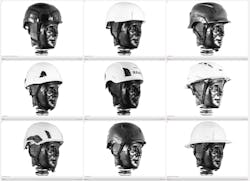
The Virginia Tech Helmet Lab has developed the first rating system for safety helmets and recently released results of its testing on multiple brands and types of construction helmets.
Testing analyzed information from falls in worksite environments and showed a clear distinction between traditional “hard hats,” known as Type I helmets, and Type II helmets that include interior energy-absorbing materials. Shifting to Type II helmets on average will reduce fall-related concussion risk by 34% and the risk of skull fracture by 65%, with the lab’s top-rated helmets showing risk reductions of 48% and 77%, respectively.
“Our findings show that choosing a Type II helmet can save lives,” said Steve Rowson, the lab's director. “The difference in protection during a fall is dramatic.”
Falls cause 60% of the industry’s traumatic brain injury fatalities and tests for the existing helmet standards, set by the American National Standards Institute, don’t accurately reflect the force of real-world falls, Rowson says. For instance, current hard hat standards only perform impacts at about a third of the energy that the Helmet Lab does in its jobsite falls tests.
Beginning in summer 2024, the Helmet Lab focused on “severe but survivable” jobsite falls and worked to translate falls from 14 feet and 25 feet to laboratory tests to evaluate concussion and skull fracture risk.
About the testing
From The Virginia Tech Helmet Lab: Each construction helmet is evaluated through a series of oblique drop tests representing severe but survivable falls, identified from jobsite accident reports. A medium NOCSAE headform is dropped onto a 25° steel anvil coated with 80-grit sandpaper at two speeds: moderate (5.5 m/s) and high (6.8 m/s). Linear and rotational head accelerations are measured for every impact and correlated to brain and skull injury risk.
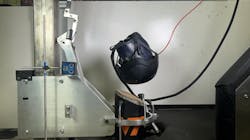
A total of 12 laboratory impacts are performed per helmet, with a new sample used for each test. Three impact locations, selected from real-world fall data and distributed around the helmet, are tested at both speeds, with two trials each. Each impact condition is weighted according to how frequently that type of fall is expected to occur on construction sites. Concussion risk and skull fracture risk are computed from the measured accelerations, multiplied by their weighting factors, and summed to produce an overall STAR score.
The weightings represent a distribution of 100 fall-related head impacts. The STAR score therefore predicts the number of head injuries a worker would sustain if exposed to 100 such impacts. Because the lab evaluates both concussion and skull fracture risk, the maximum STAR score is 200 (reflecting the possibility of sustaining both injuries from a single fall). A lower score indicates better helmet performance.
More on the findings at: helmet.beam.vt.edu/construction-helmet-ratings.html