The power of design charrettes: Transforming design and problem-solving
This blog post was authored by Chris Stine, AIA, Partner and Director of Architecture, Design Collaborative.
Regardless of which creative world you call home, it is a rare experience to find yourself working in a bubble where the first idea, design, or direction that pops into your head turns out to be a eureka moment.
In fact, it’s common to see your waste basket fill up faster than your sheet of solid ideas. We’ve all been there. Whether experienced—but just can’t get a detail to work, new to the process—and not confident your design is heading in the right direction, or just looking for a way to bring fresh eyes and unique perspectives to the table… we have a great idea. Host a charrette!
A what? By no means a new idea, nearly every day our office turns to the charrette process to jumpstart, inspire, and improve our solutions. The charrette experience, known for its focused, collaborative approach, consistently leads our design teams, problem solvers, and business leaders to more successful, stronger, and more responsive solutions. Maybe it’s time for your team to shake up your creative design or problem-solving process. Maybe it’s time to host a charrette!
What is a Design Charrette?
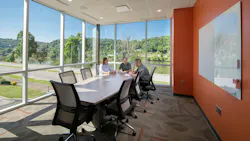
The word charrette dates back to the 1800s in France, when architecture students at the École des Beaux-Arts would put the finishing touches on their projects as their drawings were literally wheeled away in a cart (charrette in French). Over time, the term came to represent the idea of a final push, where intense creativity and collaboration happen in a condensed timeframe.
Today charrettes take many forms, both inside and outside the world of design, but its core principles of intensive, collaborative, and multidisciplinary participation are usually still present and remain the catalysts leading to breaking through creative roadblocks, moving beyond impasses, and finding design inspiration when it seems lost.
Regardless of the format your charrette takes, keep top of mind the goal of quickly gathering fresh, diverse insight and ideas. You will likely find yourself leading a focused, brief, and intense workshop-like session on your way to finding creative solutions for complex problems. Chances are you’ve been part of charrette-like experiences but heard them called “brainstorming” or “problem solving” sessions instead.
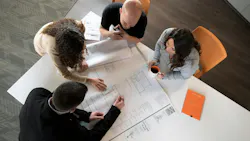
Often, the typical charrette in our office finds a small group of designers gathered around a pin-up board or monitor, each offering input or challenges to a specific design problem that the design host has just introduced. You could argue that this is the ideal example of the charrette, and you might be right. But let’s look at a few other ways the charrette could bring you benefit.
Different Styles for Different Needs
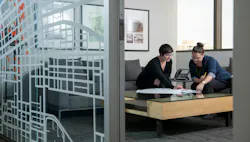
Not all charrettes look alike… and they shouldn’t. Styles are adapted to fit the needs of each project or problem. At Design Collaborative, the quick, intense problem pin-ups are the norm, but we often “brew our own” charrettes by blending formats and tailoring the approach to match the project’s complexity and our client’s goals.
Examples:
Focus Charrettes
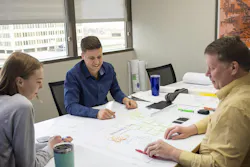
This is the pin-up or monitor show we referenced already. Perhaps an engineer needs space for concealed duct runs in a ceiling but is literally bumping into roadblocks. We break down the silos and grab an architect and interior designer, start saying “what if” and sketching. In minutes, doors will open, and you have direction. Or… ten minutes later, our environmental graphic designer walks by, stops, listens, and says, “Why can’t you just …” and bam! You’re off and running.
Rolling Focus Charrettes
This one may sound exciting, and if you nerd out on design, then it is. Simply put, it combines multiple single-focused charrettes executed at the same time—with a twist—literally. Imagine a large, round table with five designers at the ready. In front of each person, there is a unique design problem. The clock starts, and five minutes later, each design problem moves to the next designer. When you finish, everyone has contributed to solving each problem, and the session hasn’t been dominated by the strongest personality in the room. The ideas and direction stemming from this round-table approach will be surprising.
Extended Focus Charrettes
(Internal) We all have projects, where a collaborative deep dive becomes the best way to break through and reach synthesis. This is usually a multidiscipline project team already familiar with the project. For us, that consists of architects, engineers, interior designers, and an environmental graphic designer. Often the goal is less about solving a single focused “problem” and every bit about reaching a cohesive, comprehensive design. It is always a joy to sit in on these sessions and see the free thinking shared across disciplines. The results are gold, with each design discipline intimately familiar with the others approach and concepts. Better yet, these charrettes often become memorable team builders as well.

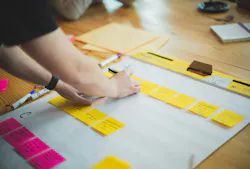
(External) Step into the realm of community-based design, and you’ll find yourself involved in or leading an “external” focused charrette. It may sound like the focused aspect doesn’t apply here. It does, but it is all about scale. Here we might find a multi-discipline group of design professionals and community leaders guiding a community outreach session to gather ideas and perspectives on a new project in their neighborhood. It’s “idea seeking” for a festival street in a downtown setting, a new parking garage opportunity in a mixed-use neighborhood, or a performance space on the courthouse lawn. The goal is fresh ideas, building buy-in, and finding excellent design solutions through diversity in thought. Stick up the Post-it pads or turn on the monitors, and you are guaranteed to leave with an understanding of the community and its project needs in a few hours.
Interactive Charrettes
Here we bring end users into the room or to a site with designers, combining technical expertise with real-world experience. Accessible design is a perfect area where this style of charrette can be powerful and leave a client feeling understood and included. Bring the Post-it easel pad, gather around the point of focus, start sharing and finding the best solutions. It’s that easy. The best part for us is we’ve never walked away from this format without growing professionally and personally.
The options for interactive charrettes are endless and aren’t restricted to designers and end users either. It is common to look in a conference room at our office and see a Teams meeting in progress with the ones who are going to swing the hammer and build our solutions. That’s right, a very common version of the interactive charrette in our office finds our team video conferencing with the trades, including masons, framers, stone quarries, and roofers to list just a few. Replace the monitor or pin-up pad with a tablet, and we are walking a site and using the charrette online to problem solve.
Spontaneous
That’s right; I made this one up. Make no mistake that the best charrettes aren’t scheduled on your calendar. They happen as you’re heading for the door after a long day and a friend says, “Hey do you have a minute?” They replace lunch when you see a young teammate struggling, so you pull up a chair, and your design diet quickly becomes a magnet for others. They happen when you walk past a group gathered around a monitor… and you just join them. Never pass up the opportunity.
The Takeaway: Charrettes Aren’t Just Tools – They Are Game Changers
Charrettes may have their roots in 19th-century Paris, but they remain one of the most effective tools for creating 21st-century spaces. If that’s not your world, don’t worry. By bringing the right people together at the right time, you too can accelerate decision-making, foster problem solving, reduce costly project rework, encourage creativity, and ultimately find your way to stronger outcomes in the studio, classroom, factory, lab, or even your home.
We believe the best solutions grow when we welcome others to the table. Whether you’re envisioning a new space or rethinking an existing one, our team is ready to listen, collaborate, and bring fresh ideas to the process. Reach out today to discuss how we can help bring your vision to life and tell your story through design. You never know, you may just find yourself in the middle of your own charrette before you know it.
About the Author
Design Collaborative
Design Collaborative is an award-winning multi-disciplinary design firm founded in 1992, with the belief that through our work, we can improve people's worlds. With nationally recognized expertise and a passion for improving worlds, DC has grown to become consistently ranked amongst the top 100 firms in the country by staying focused on designing people-first places. At DC, we provide boutique firm experience with big firm expertise and resources. Our team includes architects, engineers, interior designers, cost estimators, graphic designers, and support staff. We are a one-stop solution, providing real-time collaboration and problem-solving. Follow Design Collaborative on Facebook, Instagram, and LinkedIn.