AIA publishes guide to advance regenerative design
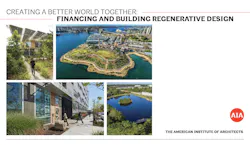
The American Institute of Architects (AIA) released Creating a Better World Together: Financing and Building Regenerative Design, a guide to help architects and policymakers advance regenerative projects from concept to completion.
The report explores financing and policy tools needed to deliver regenerative projects, showcases six case studies across varied geographic and cultural contexts, and outlines actions to accelerate adoption of regenerative design.
AIA defines regenerative design as the holistic approach to enhancing and restoring buildings, communities, and nature, which integrates buildings within their natural and social environments to actively restore ecosystems, strengthen communities, and create a net-positive environmental impact.
The report identifies five interconnected pillars that underpin the practice of regenerative design:
- Whole Systems Thinking: Planet, ecosystems, and communities are interconnected
- Optimize Carrying Capacity: Aligning decisions with a place’s ecological limits and opportunities
- Spirit of Place: Design emerges from ecological and cultural context
- Active Renewal: Design restores water cycles, enriches biodiversity, and generates more energy than consumed
- Design Evolution: Design for adaptability so performance improves over time
Of the six case studies, funding mechanisms shaped project outcomes of some. In others, regenerative design approaches unlocked new investment opportunities.
Across all examples, architects expanded their role beyond traditional design services, helped convene stakeholders, restored ecosystems, strengthened communities, and created lasting value for clients and the places they serve.