The mall of the future, driven by the teens of today
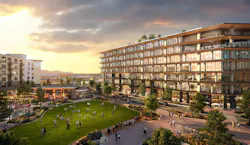
Today’s shopping malls are faced with a difficult task: Reposition, repurpose, or die.
In the past several years, we’ve seen malls become vacant, new construction decline, and foot traffic decrease. However, the “dead mall” narrative may be coming to an end as shopping centers increasingly shift toward experiential retail strategies, open-air concepts, and mixed-use anchoring.
Across the first half of 2026, Placer.ai reported sustained year-over-year visitation growth, with open-air centers leading at 4.7%, followed by indoor malls (1.9%) and outlet malls (1%).
Similarly, more stores have opened than closed in recent years: 9,760 new stores opened in malls compared to 5,640 closures, resulting in a net gain of 4,120 stores in 2025 alone, according to a June 2026 research report by Capital One Shopping.
Who is driving this surge in shopping mall traffic and demand? By and large, it’s the latest generations of teens, tweens, and young adults.
It seems that as the population ages, the needs of the mall shifts in tandem. The teenage consumers of the 2020s demand different social spaces than those of yesteryear. Technology has been a heavy driver, but not in the way that everything has gone digital.
Instead, technology has created a unique opportunity for brands to adapt their stores into a must-see destination. It’s all about one thing: The customer journey.
From YouTube Shorts to Shopping in Stores
Digital discovery is the cornerstone of the mall of the future. Imagine this: You’re scrolling on your timeline and stop to find an advertisement for a skincare brand. You could purchase the item online, sure—the TikTok shop accounted for nearly one-fifth of all social commerce in the U.S. in 2025 alone—but you want to feel the product. Touch it, smell it, test it.
From the decision to purchase that product with intention, the shopping mall becomes your best friend. That’s the sentiment of today’s Gen Alpha and Gen Z shoppers, at least.
According to a December 2025 report by global architecture and design firm MG2, Young in Age, Mighty in Impact: Gen Alpha is Rewriting The Rules For Brands, 73% of Gen Alpha consumers prefer shopping in-store. They find value in the tactile, hands-on experiences that let them explore products, validate their purchase decisions, and engage with brands.
In fact, engaging with brands is one of the more important factors for tween and teen shoppers. The MG2 report found that 97% of Gen Alpha want to help brands make design decisions, including product testing and shaping how their stores look and feel.
Being flexible has always been key to be successful in this market.
- David Russel, Community Experiences Principal, MG2
Some intriguing insights from teens are that three in four Gen Alpha say in-store food and beverage offerings drive them to spend more time in a store, as it encourages spending more time browsing. Sixty-six percent of Gen Alpha also rely on clear in-store signage to reflect the simplicity they have come to expect from online engagement.
It’s not just teens with all the buying power, however. According to the report, 70% of Gen Alpha say that adults in their lives often purchase items that they suggest.
How are brands adapting to the shift in generational influence, then?
How Brands Are Adapting to Teenage Influence
Bold and bright color design is taking over. Avant-garde fixture shapes capture the attention of Gen Alpha and Gen Z shoppers more than the sleek, minimalist designs of the past.
Creator-led concepts are also having a moment. Malls that have popups that move with today’s culture are something that Gen Alpha is seeking out.
And of course, teens are interested in brands that move sustainably and authentically. Trust is built through action, not words—61% of survey respondents indicated that they can tell a brand is “doing good” based on real-world sustainability events, recycling, and the like. This has also led to more brands embracing resale and wellness products.
Teenage shoppers also expect to move at their own pace when in a store. The majority of Gen Alpha prefer to wander and find products on their own, according to the MG2 report.
“For brands and retailers, the opportunity is to create experiences that let Gen Alpha explore on their own terms, allowing them to be seen first and foremost as customers rather than just by age,” the report states.
What shopping malls offer outside of each brand’s individual location are experiential destinations and an extension for brands across the mall’s footprint. The customer journey has the opportunity to extend beyond the storefront and into the transitional spaces of the mall (Think: a massive Lego statue outside the Lego store, or dedicated testing stations for new perfume product lines).
How the Mall of the Future Responds to New Shopping Trends
The mall of the future includes a shift in the curation of spaces. How does one shopping center differentiate itself from another? Wellness-oriented spaces are a big driver—this includes the implementation of biophilic design. Additionally, electronic entertainment will only continue to grow as technology develops. The biggest strategies, however, involve anchoring the mall to other destinations.
Parks, hotels, third spaces where people don’t have to spend a dime are becoming common elements to tie in malls with a mixed-use strategy. We’ve seen recently how malls are no longer single buildings surrounded by a massive parking lot. The shift is in creating a space for the whole community, inside and out.
AEC firms like Core States Group are seeing developers intentionally reduce traditional leasable square footage in favor of outdoor gathering areas, green space, event venues, and experiential uses that encourage people to spend more time on-site.
“The result is a more flexible ecosystem where shopping, dining, entertainment, residential, and office uses work together to create consistent traffic throughout the day,” says Jade Nunes, Retail Market Director, Core States Group.
Who anchors the mall isn’t the same as it was in the past. That will continue to evolve.
- Melissa Gonzalez, Principal and Founder of MG2 Advisory, MG2
In some communities, malls are being reenvisioned as potential urban villages, according to Jason Marechal, PE, LEED AP, Vice-President, Kimley-Horn.
“This is achieved through a phased redevelopment process, typically, with residential as a key new use,” says Marechal. “Once residential uses are introduced into a mall, it's critical to reorient the mall site to allow for enhanced multimodal access and strategic open space.”
For the young shoppers of today, being able to explore the site freely with their peers is key. Indoor-outdoor experiences will be a staple of future mall development.
When it comes to the mall of the future, Jason Marechal says it best: “Society is well served by third spaces that are physical rather than virtual, and malls that can serve as gathering places for people while also embracing the power of virtual communities will be so valuable to our communities moving forward.”
About the Author
 Quinn Purcell
Quinn Purcell
Quinn Purcell is the Managing Editor for Building Design+Construction. Covering the building industry for over four years, he has contributed to several award-winning industry reports, physical/digital magazines, and online news coverage. Quinn delivers content ranging from multifamily housing, technology, sustainability, and more.
For BD+C, Quinn runs the brand's 40 Under 40 program, covers product updates monthly, manages a blog partnership with over 50 AEC firms, and writes daily analytic-driven content for the website.