Why trend-driven workplaces fail the stress test
This blog post was authored by Collin Barnes, Interior Designer, RDG Planning & Design; and Katie Parker, Interior Designer, RDG Planning & Design.
The future of work isn’t arriving on a predictable timeline. It’s unfolding through disruption: pandemics, rapid technology shifts, hybrid work and evolving expectations about how and where work happens. Workplaces designed around a single moment or trend often struggle when conditions change, quickly becoming inflexible, exclusionary or outdated.
Stress-tested design offers a more durable approach. Rather than optimizing for today’s norms, it evaluates how a workplace performs under pressure, focusing on human needs that remain constant even as everything else evolves. Comfort, control, connection and access become the true measures of resilience.
Resilience Starts With People
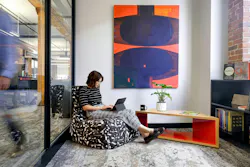
When workplaces fail, it’s rarely about aesthetics. It’s about environments no longer supporting the people inside them. Key human-centered foundations include:
- Physical comfort: Ergonomics, lighting, thermal control and opportunities for movement support health and sustained performance.
- Cognitive comfort: Spaces for focus, privacy and reduced distraction help people manage complex work.
- Emotional well-being: Welcoming, inclusive environments foster belonging, trust and retention.
These elements aren’t only perks. They’re essential infrastructure for adaptability.
Designing for Choice, Control, and Inclusion
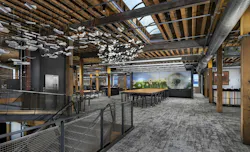
Flexibility consistently outperforms certainty. Resilient workplaces offer:
- A range of settings for focus, collaboration, social interaction and restoration
- User control over lighting, acoustics and location
- Inclusive features that support diverse abilities, ages and neurodiversity
- Privacy options that respect different work styles
When barriers are removed through thoughtful design, people are empowered to adapt in real time without friction.
Connection as a Resilience Strategy
As hybrid work reshapes the role of the office, social spaces become strategic assets rather than extras. Well-designed gathering areas, from informal lounges to shared kitchens, support mentorship, collaboration and culture-building. Even modest spaces, when designed intentionally, can strengthen relationships and foster belonging, driving engagement and long-term resilience.
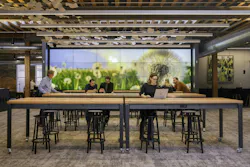
Stress-Tested Design in Practice: RDG’s 301 Grand office
RDG’s 301 Grand workplace put these principles to the test sooner than expected. Opening just before the COVID-19 pandemic, the office was forced into an immediate real-world stress test.
Because flexibility and adaptability were embedded from the start, the space could quickly adjust to hybrid work, shifting densities and new collaboration needs without disruption. What could have become a liability instead proved the value of designing around people rather than assumptions.
The Takeaway
Stress-tested design isn’t about predicting the future of work—it’s about preparing for many possible futures. By prioritizing comfort, control, connection, and inclusion, workplaces can adapt and endure to support people through change with confidence.
Hence, in an uncertain world, resilience is the most future-ready design strategy of all.
About the Author
RDG Planning & Design
RDG Planning & Design is a nationally recognized, multidisciplinary firm offering professional services in architecture, landscape architecture, interior design, lighting design, strategic planning, urban and comprehensive planning and design, graphic design, engineering and integrated and public art. Diverse in knowledge and experience, we are united in our pursuit to create meaning together with our clients and in our communities, and by our drive to live life responsibly and do it well. Decades of dedication to success have taken us around the world, and today, our commitment to communication and technology allows us to engage clients anywhere from our offices in Colorado, Iowa, Missouri, Nebraska, New York, and Wisconsin.