The rise of 'no-building' industrial real estate
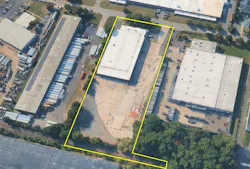
The criteria for those evaluating industrial properties has shifted dramatically in the past several years. Building size and location still matter, but many occupiers now begin their search with a more practical question: Does the site have the outdoor space to support a wide range of daily operations?
A logistics operator may need trailer parking and truck circulation to keep vehicles moving efficiently. A contractor may require outdoor storage for equipment, materials, and service vehicles. A host of different occupiers are seeking abundant usable land to support transportation-heavy operations.
These demands are fueling interest for low-coverage industrial properties across infill markets. In fact, Industrial Outdoor Storage (IOS) facilities are some of the most competitive assets in Northern and Central New Jersey.
The shift reflects broader changes in logistics and supply chain management. The e-commerce movement has accelerated demand for vehicle-intensive industrial sites, but the trend stretches well beyond consumer delivery. Third-party logistics providers, utility companies, building suppliers, and infrastructure firms all rely on some combination of warehouse space, outdoor storage, and fleet parking. Older industrial properties were often designed for a different operating model. On paper, the square footage may look sufficient, but in reality, once trucks, trailers, and equipment enter the picture, the site can quickly become constrained.
Electric and autonomous vehicle proliferation is adding another layer to the conversation. According to CBRE’s 2026 U.S. IndustrialOutlook, occupiers continue prioritizing logistics functionality and operational efficiency as distribution networks evolve. Charging infrastructure, electrical capacity, and parking layout are becoming more important as companies begin electrifying portions of their fleets. Some older sites simply do not have the land configuration or utility profile to support these future requirements.
Demand for IOS is colliding with limited supply, particularly in New Jersey, which remains highly attractive based on its proximity to major highways, the Port of New York and New Jersey and dense consumer markets. However, tenants in this space have very specific requirements—industrial zoning, functional outdoor area, workable truck/vehicle circulation, and strong highway access—making replacement sites extremely difficult to find.
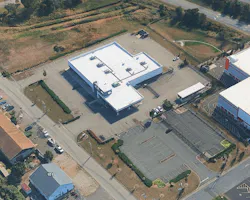
Very few sites check every box. Recent Newmark research has pointed to continued supply constraints for IOS properties in infill logistics markets where zoning restrictions and shrinking land availability limit new development opportunities.
Repositioning industrial properties
Because new supply is nearly impossible to create, owners are taking a closer look at repositioning older industrial properties that may once have been overlooked. Increasingly, value can be created by improving the functionality of an existing, obsolete site that already sits in a desirable location.
The repositioning work itself is often straightforward. Repaving truck courts and outdoor storage areas can immediately improve circulation. Upgraded lighting enhances security and operations for tenants running around-the-clock schedules. Loading areas may need to be reconfigured to reduce bottlenecks. Sometimes, the most valuable improvements are the least glamorous because they remove everyday operational frustrations for tenants.
More-complex repositionings include increasing functionality of the outdoor area either through site plan modifications (reducing former green spaces, etc.) or partial building demolition.
Financially, that strategy can make sense in today’s market. Ground-up industrial development remains expensive, entitlement timelines are lengthy, and infill land is increasingly scarce. Repositioning an underutilized property can often generate stronger returns with less development risk, particularly when owners acquire the asset at the right basis and focus capital spending on improvements tied directly to functionality improvements. Higher occupancy and stronger rental rates often follow when a site becomes easier to use.
One recent example is 152 West Street in South Plainfield, N.J., a former insurance claims center that is being repositioned into a modern IOS facility. Located directly off Exit 4 of Interstate 287, the 4.1-acre property combines a 22,000-sf building with substantial outdoor operational space designed for fleet parking and/or outside storage. Our team worked with local officials to expand permitted uses at the site, allowing the property to better accommodate modern logistics users. The repositioning includes upgraded paving, secured yard space, and modernized flex space intended to support vehicle-intensive operations. In this and surrounding markets, land zoned for outdoor storage has become increasingly scarce, highlighting why low-coverage industrial assets like 152 West Street are attracting growing attention from both tenants and investors.
Also, at 160 Essex Avenue East in Avenel, N.J., we acquired a 40,000-sf warehouse facility on approximately five acres near Exit 12 of the New Jersey Turnpike. After completing site and building upgrades, we leased the property to Lion Transportation, a used vehicle logistics and exporting company whose operations relied heavily on both indoor and outdoor functionality.
Institutional investors are diving into IOS for similar reasons. Functional outdoor storage sites are difficult to replicate, especially in dense infill markets near transportation infrastructure. Earlier this year, PGIM Real Estate provided $103 million in financing for a 23-property IOS portfolio spanning 18 U.S. markets, highlighting the level of institutional capital now entering the sector.
The growing interest in IOS ultimately comes down to practicality. Logistics users need sites that support how their businesses actually operate. Owners are finding opportunities to create value through focused repositioning strategies that meet the market. Well-located industrial land with functional outdoor capacity is becoming harder to replace each year, and investors will continue to seek assets that accommodate tenant needs.
About the Author
Zach McHugh is charged with sourcing and executing new investments on behalf of Sitex in New York City and South Florida. Since joining the firm in 2016, Zach has closed $500 million of industrial investments across Sitex’s target markets. In addition to his investment responsibilities, Zach oversees asset management for Sitex’s existing portfolio in New York City.
Zach began his real estate career in New York City at BlueGate Partners working on capital raising for multifamily developers in the tri-state area.
From BlueGate, Zach moved to KTR Capital Partners, where he executed acquisition and development investments in New Jersey, Atlanta, and Pennsylvania. Following his time at KTR, Zach joined Brookfield where he was responsible for sourcing and executing industrial investments in the mid-Atlantic and New Jersey.
Throughout Zach’s career, he has closed over $700 million of industrial investments across the Mid-Atlantic and Northeast regions.
Zach is a graduate of Stevens Institute of Technology in Hoboken, N.J.