A new shower design aims to improve care for people living with dementia

A newly redesigned shower room aims to improve care for people living with dementia.
Located in the Specialized Dementia Unit at University Health Network’s Toronto Rehab University Centre, the space addresses a common challenge in care environments, where unfamiliar surroundings, noise, and limited privacy can make showering a disorienting and stressful experience.
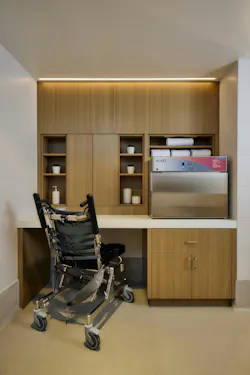
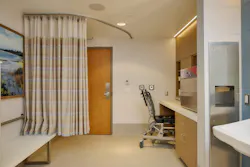
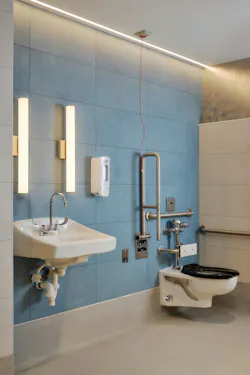
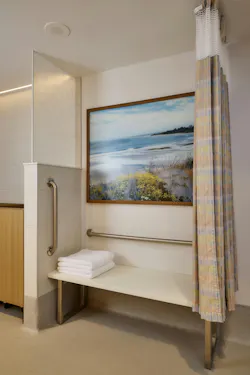
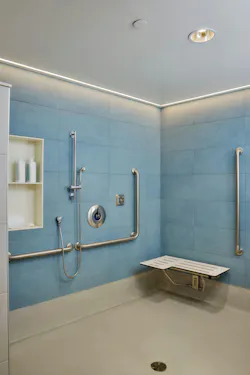
The design takes a biophilic approach that uses wood and natural colors to create a calmer atmosphere. The space also creates a spa-like, patient-centered experience by seamlessly integrating accessibility and prioritizing comfort, dignity, and ease of use through soft lighting, reduced glare, clear spatial organization, and slip-resistant flooring.
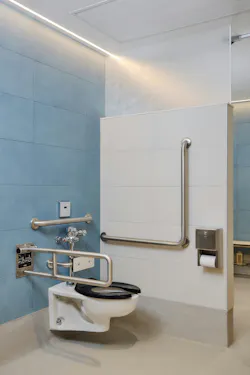
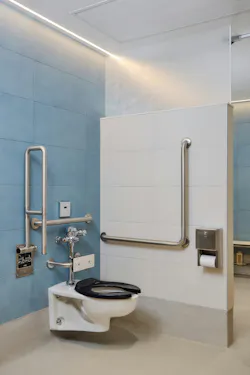
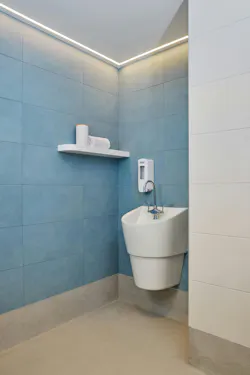
In addition to a soothing visual design with calming art installations, the research-informed space offers a towel warmer, a designated area for sitting and changing, a spacious layout with an accessible toilet, a dedicated grooming station, and a heating panel for added warmth.
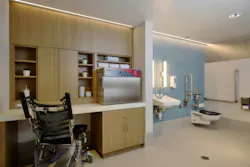
“Our impression is that this new shower space has made a big difference and had a big impact,” Dr. Andrea Iaboni, the Specialized Dementia Unit’s medical lead who also headed the project, told UHN. “It’s more serene, calming, and less claustrophobic, and provides lots of options to support patients who are receiving their showers.”
The project began at the graduate Design for Health Spatial Studio of OCAD University, Canada’s oldest and largest art and design school, in downtown Toronto.
The studio guided students through an evidence-based design process that led to concepts for the unit, including the existing shower spaces. This early work informed UHN’s built solution.
Selected through a competitive RFP, Canada’s Kasian Architecture led the collaborative design process. The team worked with UHN, family members, researchers, and donors to take a human-centered design approach from schematic design through construction.
The team also engaged with individuals from the community who have lived experience with dementia caregiving and whose insights helped shape the design.
Kasian used evidence-based research along with input from staff, patients, and families to align the built space with the project goals.