Top 10 trends in cancer center design and construction for 2026–2027
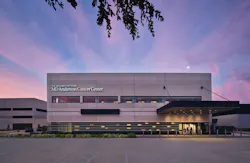
According to the American Cancer Society, more than 2.1 million new cancer cases are projected in 2026. That’s 5,800 per day.
A scary figure, but one that is accelerating innovation in how cancer care is delivered, designed, and experienced. The outlook for cancer centers is twofold: There will be both a growth and a shift in the market.
Driven by improved patient outcomes, increased patient volumes, rapid population growth, technology and research advancements, and expanding community-based care models, cancer centers are both expanding and consolidating.
As demand grows for comprehensive, one-stop care, investment is increasingly focused on targeted renovations and expansions rather than large-scale greenfield developments. There is also a drive towards expanding partnerships between research/academic cancer centers and community-based, rural providers.
Many firms also cite a shift in how cancer centers are being designed and operated. From an evolving patient demographic to a shift towards outpatient settings, cancer care is becoming less invasive, highly flexible, and increasingly decentralized.
The fact that more patients are living with cancer longer—managing it as a chronic condition—means that facilities that were designed with short treatment durations are outdated.
“That shift has real design implications,” says Mark Patterson, AIA, NCARB, EDAC, Architect, SMRT Architects & Engineers; and Derek Veilleux, AIA, EDAC, NCARB, Senior Principal, Director of Health & Wellness Practice, SMRT Architects & Engineers. “Facilities that were sized and programmed for shorter treatment durations are feeling pressure to expand, and clients are increasingly asking how a space can support patients over years of care, not just weeks.”
Firms across the board agree: Cancer center development growth is increasingly defined by outpatient expansion, targeted renovations, decentralized care networks, and deeper integration of research, technology, and community-based partnerships.
Top 10 Trends in Cancer Center Design and Construction
1. Growth in outpatient facilities
A major trend shaping cancer center design is the continued shift toward freestanding outpatient facilities. This is due in part to treatments becoming less invasive, but also, as ZGF Principal Janet Pangman, AIA, NCARB suggests, because CMS/Medicare is shifting towards allowing for more procedures to be reimbursed in outpatient settings rather than requiring them to be done in a hospital.
Due to advances in remote monitoring and digital health, more complex cell therapies such as chimeric antigen receptor (CAR) T have the opportunity to show up in more outpatient clinics, finds Catherine Zeliotis, Principal, Stantec.
This increase in outpatient visits due to improvements in detecting and treating cancer is leading to enhancing patient lobbies, waiting areas, and treatment spaces across the cancer care ecosystem, notes Troy Hoggard, Great Lakes Regional Design Director, CannonDesign.
2. Flexibility and future-proofing are fundamental
As cancer care continues to undergo rapid progress, flexibility is becoming a must in these facilities.
“Every space, piece of equipment, and patient room needs to be flexible and adaptable,” says Hoggard. “Cancer care is evolving far too rapidly for us to invest in fixed assets.”
Though this means flexibility in furniture, it also means flexibility in accommodating new technologies.
“From precision medicine, research integration, and advanced imaging to AI-assisted diagnostics and personalized treatment planning, cancer centers demand flexibility to accommodate innovation,” says Krutarth Jain, AIA, ACHA, EDAC, LEED AP, Principal, Champlin Architecture | EOP Architects; and Priya Dhuru, AIA, LEED AP, NOMA, Principal, Champlin Architecture | EOP Architects.
The biggest consideration for flexibility is future-proofing. As cancer centers adapt and upgrade, anticipating future needs is essentially mandatory.
“Already navigating these considerations, architects, engineers, contractors, and equipment vendors are working together to anticipate future needs, with the goal that care spaces can accommodate rapid shifts in technology without having to undergo frequent renovations,” says Michael Roberts, Project Director, Robins & Morton.
3. Technological advancements through AI, wayfinding, and imaging technologies
From imaging technologies to AI, cancer center equipment is increasingly becoming more complex. Firms such as CannonDesign are seeing wearables, artificial intelligence, and even robotics being used to personalize and streamline patient experiences.
Lauren Andrysiak, Senior Design Leader, CannonDesign, believes the use of new technology will elevate the arrival experience to hospitality-like levels, improving the experience of both patients and staff.
The incredible pace of cancer research is also driving the use of new, specialized diagnostic and cancer equipment—equipment that “requires close coordination among engineers, architects, and owners to address unique and specialized installation and operational challenges,” says Abhishek Ajansondkar, Project Manager and Healthcare Market Leader, Affiliated Engineers, Inc. (AEI).
According to Conor Devine, New York Project Executive, Skanska USA Building, MR-LINACs are a leading-edge technology that are starting to be installed in a few healthcare facilities around the country. This kind of technology requires plenty of hands-on coordination between teams for design and installation.
Because imaging, radiation, and AI-driven tools are advancing so quickly, owners are investing upfront in technology to avoid costly retrofits later, according to Joel Benavides, Director, Healthcare, Joeris General Contractors.
4. Whole-person care/designing human-centered spaces
If there was one trend that emerged most often among AEC firms, it would be the focus for patient comfort. This involves anything from environmental control to wellness amenities; the whole-person care model is a strong differentiator among cancer centers.
Patient comfort comes first. As Ajansondkar notes, giving patients greater control over their environment—such as remote-control roller shades for lighting and thermal comfort—is central to cancer center design.
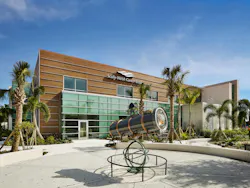
Acoustic attenuation and concealment of medical systems also add comfort on the aesthetic level. Some patient-centered environments allow individuals to control lighting, privacy, and comfort settings, reinforcing personal comfort during long treatments, according to Champlin Architecture | EOP Architects.
Additionally, incorporating hospitality-like care such as high-end finishes and comfortable waiting spaces can not only improve the patient experience, but positively impact outcomes as well.
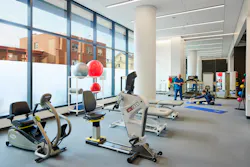
It goes beyond comfort, too. The whole-person care model can include anything from complementary therapies—meditation, yoga, nutrition classes, and counseling—to amenity-rich environments, like “image renewal spaces” (wig boutique and prosthetic services) and rehabilitation gyms.
We intentionally embed these amenities into the overall care journey to support long visits, reduce stress, and strengthen patient comfort, dignity, and resilience,” says Eric Koffler, RA, IIDA, LEEP AP, EDAC, WELL AP, Medical Planner and Healthcare Architect, Gensler; Collen Harrington, IIDA, NCIDQ, CHID, EDAC, LEED AP, Senior Interior Designer, Gensler; and Annabella Koloskov, AIA, LEED AP BD+C, Healthcare Planning Director, Gensler.
Designing treatment environments that reduce stress through controllable lighting, personalized sound, and access to nature … are supported by growing evidence that biophilic design improves emotional well‑being and supports healing.
- Nathalie Begin, AIA, NCARB, Architect and Medical Planner, SmithGroup
5. Biophilic design expands even further
Biophilic design is everywhere—office buildings, schools, housing—but none may be as important as it is in healthcare.
From daylighting to green spaces and views of nature, biophilia enhances a space and allows patients to feel at ease with their environment. LEO A DALY even sees amenities such as healing gardens becoming more common.
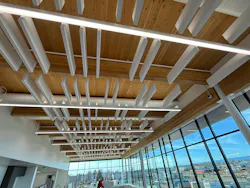
Also becoming more prevalent in cancer center design and construction is the use of mass timber. One Skanska project features a two-story, hybrid mass timber and steel structure with floor-to-ceiling windows and skylights. This allows infusion patients to receive their treatments in a second-floor suite featuring exposed CLT and expansive views of the nearby Cascade mountain range.
Dean Lewis, National Director of Mass Timber and Prefabrication, Skanska, believes we are going to see more mass timber projects in healthcare, and that we’re going to see larger portions of the projects that are mass timber.
6. Renewed focus on the staff experience
Due to burnouts and workforce shortages, there has been a renewed focus on the experience of cancer center staff.
“Oncology nurses have one of the highest burnout rates of any clinical specialty,” says Teresa Endres, AIA, ACHA, EDAC, AAH, Principal and Senior Medical Planner, HOK. “When nurses need to decompress after losing a patient or delivering difficult news to a family, many find themselves seeking stairwells and bathroom stalls for a private space to process.”
What designers can do is go beyond the traditional staff lounge. Endres argues that, while lounges serve a social function, they do not provide staff members with a space to go when they need a moment alone.
The firm champions dedicated respite and recharge rooms—small, 60–80 sf private spaces located on the building perimeter with access to natural daylight and views. Respite rooms offer a place to decompress emotionally, while recharge rooms support physical rest during back-to-back shifts.
“Both spaces signal to staff that their organization is committed to their wellbeing and can aid in recruitment and retention,” says Endres.
Gensler echoes this sentiment, noting that these strategies help reduce fatigue, improve focus, and enhance both staff satisfaction and the overall care experience.
7. Embedding research in the care environment
There is becoming a collapse of the boundary between care and research. Cancer centers are increasingly expected to deliver advanced trials and therapies as they happen, demanding research infrastructure that is fully integrated within the care environment.
“This fundamentally changes the approach to planning and design,” says Jacqueline Foy, AIA, ACHA, LEED AP, Global Health Director, HDR. “It’s about integration, not adjacency.”
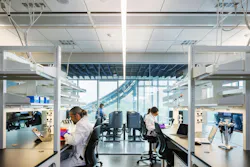
Gensler finds that its clients are increasingly choosing to co-locate research labs and clinical teams within the same building.
Leading institutions are expanding cancer care beyond the main campus through community-based ambulatory and outpatient networks that bring advanced services closer to patients’ homes. As clinical trials increasingly move into these settings through decentralized and hybrid models, cancer care environments are evolving into flexible, connected systems that support research, advanced therapies, and easier access to emerging treatments.
What makes this trend designable, according to Endres, is HOK’s approach of using modular design and a universal structural grid.
By using a consistent structural module that can support exam rooms, treatment areas, and laboratory benches interchangeably, buildings gain the flexibility to evolve over time—shifting between clinical and research functions as organizational needs change.
“In oncology, where treatment modalities are changing rapidly, that adaptability is non-negotiable,” says Endres.
Many facilities can support care. Far fewer are designed to support the science behind the care.
- Jacqueline Foy, AIA, ACHA, LEED AP, Global Health Director, HDR
8. The ‘one-stop shop’ model continues to gain traction
Likewise, cancer centers are continuing to become “one-stop shops” for patients. Patients want to access consults, imaging, labs, treatment, and follow-up care in one location, which is becoming a key differentiator for health systems, according to Benavides.
It’s the “defining feature of next-generation cancer centers,” says Marsha Whitt, CHID, EDAC, NCIDQ, Lean Six Sigma, Healthcare Vice President and Director of Operations – Healthcare, LEO A DALY. “Bringing together imaging, radiation oncology, infusion, pharmacy, labs, and support services into a single, integrated environment enhances efficiency and creates a more seamless patient experience.”
One of Skanska’s clients at the Blood Cancer Healing Center even noted that having to go to multiple buildings or campuses for cancer care was deterring patients from continuing their treatment plans. The one-stop shop model breaks down that barrier and makes it seamless for patients to continue treatment.
This model is especially prevalent in urban markets, according to Ryan Ramsey, Assoc. AIA, LEED AP BD+C, Lean Black Belt, Senior Medical Planner and Associate Principal, Perkins&Will. Ramsey finds that this movement is making oncology care more accessible, scalable, and cost-effective.
9. Healthcare projects embrace alternative funding sources
According to a few firms, clients are becoming more open to various funding/financing strategies.
Trends in public-private partnership (P3) funding has prompted some firms to rethink how they engage and market themselves within the developer community, and how developers position themselves to specialize in the healthcare sector.
These developer-led, long-term lease models typically follow a design-build delivery method and are built-to-suit, according to Ramsey.
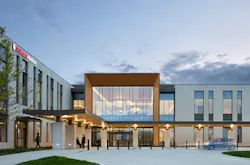
One example is a recently completed micro-hospital and cancer center project for UChicago Medicine (UCM) in Crown Point, Ind., which used a P3 delivery model, collaborating with Pacific Medical Buildings (PMB) as the developer, Walsh Construction as the general contractor, and Perkins&Will as the architect.
Likewise, collaboration between university research and patient care is taking on a new meaning, cites Nathan Minnich-Weber, Ohio Project Executive, Skanska USA Building. Due to heightened financial challenges in the market today, some academic medical centers are looking to their university partners for creative financial strategies and partnerships.
For example, Skanska is upgrading the former Shriners Hospital in Cincinnati, Ohio, to meet the needs of both UC Health and the University of Cincinnati. A portion of the hospital will become research space for the University of Cincinnati College of Medicine and UC Health will be leasing and occupying portions of the building for its Blood Cancer Healing Center (BCHC)—the nation’s only blood cancer facility where patients can access all their care in one place.
10. Cancer centers adapt to a multigenerational patient base
An interesting trend—one that you don’t think would inherently affect the design of cancer centers—is the shifting demographics toward a younger patient base. While it’s true that the aging population is filling cancer care with older patients, the opposite is also true: There is an increasing amount of younger patients coming into centers.
This is aided in part by increased awareness of cancer diagnoses, but also in increased cancer rates in general.
This is a demographic shift that “the industry needs to take seriously,” says SMRT’s Patterson and Veilleux. Facility design should balance between these generational differences to focus on improving the patient experience.
About the Author
 Quinn Purcell
Quinn Purcell
Quinn Purcell is the Managing Editor for Building Design+Construction. Covering the building industry for over four years, he has contributed to several award-winning industry reports, physical/digital magazines, and online news coverage. Quinn delivers content ranging from multifamily housing, technology, sustainability, and more.
For BD+C, Quinn runs the brand's 40 Under 40 program, covers product updates monthly, manages a blog partnership with over 50 AEC firms, and writes daily analytic-driven content for the website.