UC Berkeley turns a modest campus building into a new home for its Disabled Students’ Program
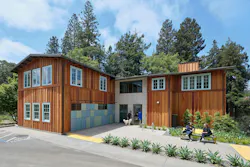
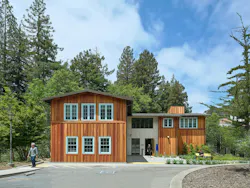
At the University of California, Berkeley, Leddy Maytum Stacy Architects (LMSA) has transformed a modest wood-frame building originally built for military science instruction into a new home for the university’s Disabled Students’ Program.
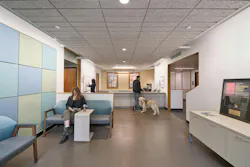
Located in the campus core, the renovated Creekside Center allows for improved and expanded services for more than 6,000 students served by DSP. The 8,800-sf facility provides a centralized space for disabled student services and consolidates DSP staff, which had been dispersed across several locations.
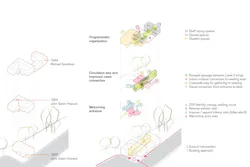
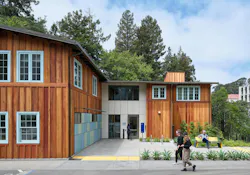
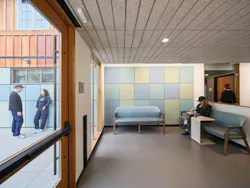
A revitalized entry plaza serves as an outdoor extension of the reception lobby. A courtyard also strengthens connections to the outdoors.
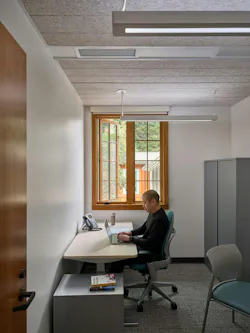
Off the reception area, a low-sensory room for de-escalation offers a calm and quiet waiting area. The low-sensory room and disability specialist offices are acoustically isolated from adjacent spaces.
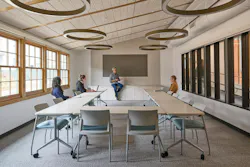
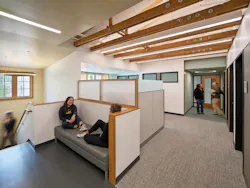
To address a wide range of communication styles, transitions between spaces are marked not only with typical code-required signage but also with accent colors, tactile material changes, and lowered ceilings.
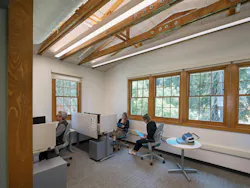
In addition to upgrading the Creekside Center’s seismic and life safety performance, the project tightened the building envelope and added enhanced-filter ventilation to all spaces. Individuals can customize their workspaces with environmental controls such as operable windows, dimmer switches, and thermostats in every office. Direct and indirect LED fixtures and finishes provide an even distribution of daylight.
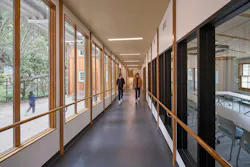
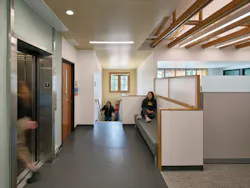
Gender-neutral restrooms flank the building’s first elevator. Floor-level control buttons enable users to operate the elevator with their feet, wheelchairs, or other mobility devices. New ramped passageways connect the east and west wings while revealing activity within the building.
The $16 million project’s goals were created through an inclusive and iterative process involving DSP leaders, staff, and students served by the program, as well as other campus stakeholders. The team used inclusive communication methods such as clay and 3D-printed drawings, alternative text, and closed captioning at meetings.
On the project team: University of California, Berkeley (owner), Leddy Maytum Stacy Architects (architect), Sherwood Design Engineers (civil engineer), Forell | Elsesser (structural engineer), Buro Happold (MP engineer), The Engineering Enterprise (electrical engineer), SGH (envelope), In Situ (landscape architect), Plant Construction (contractor).