Report explores resilient design on college campuses
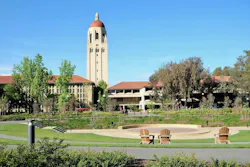
This year’s annual Comparing Campuses research by Ayers Saint Gross focuses on resilient design highlighting how colleges and universities rebuild, adapt, and evolve to support their communities through change.
The 2026 report outlines 12 actionable resilience strategies that have enabled institutions to navigate environmental pressures, financial drivers, social and cultural change, public health disruptions, external conflicts, and pedagogical evolution.
These are:
- Embedding natural solutions
- Planning for adaptable mobility
- Rightsizing assets
- Supporting gathering and expression
- Reinvesting in and adapting existing assets
- Embedding student support in place
- Reinforcing memory and meaning
- Incorporating system redundancy
- Enabling digital and hybrid community
- Designing for cross-pollination
- Distributing critical functions
- Designing for slack
“These strategies offer a practical toolkit for institutional leaders, planners, designers, and campus communities seeking to strengthen long-term resilience,” according to an Ayers Saint Gross news release. “The research also emphasizes the way decisions about space, infrastructure, landscape, mobility, identity, and student support can expand or limit an institution’s capacity to remain connected, responsive, and purposeful through uncertainty.”
“Campuses have always been shaped by change, whether gradual or sudden,” explains Allison Wilson, sustainability director, Ayers Saint Gross. “But when institutions invest in natural systems, adaptable infrastructure, flexible space, and places for people to find community, they create campuses that can respond to disruption while continuing to support learning, belonging, and discovery.”