6 key takeaways from BD+C's 2026 data center webinar
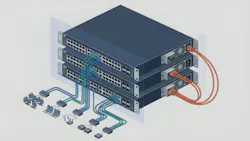
Earlier this month, BD+C hosted a live webinar on key trends in the $41 billion U.S. data center construction market. Experts from three leading Data Center Giant firms presented the latest trends, projects, opportunities, obstacles, and research related to the data center market.
The biggest takeaway? AI-driven demand is changing data center design and construction from a building-delivery challenge into a campus-wide infrastructure, power, and workforce challenge.
The speakers repeatedly returned to the same themes: faster delivery, higher computing densities, power constraints, prefabrication, and growing pressure to address community concerns.
6 Takeaways From BD+C's 2026 Data Center Webinar
Here is a recap of the biggest findings to come out of this month's data center webinar.
1. AI is reshaping data center design from the inside out
Marcella DeLong, AIA, Principal, Data Centers, Corgan, who specializes in large data center programs, said the growing demand for AI computing is changing the fundamental design requirements of data centers. Higher rack densities are creating new challenges for cooling, structural loading, electrical infrastructure, and long-term flexibility.
- DeLong cited a recent baseline of at least 30 kW per rack, with some AI workloads requiring higher densities.
- Concentrating more computing power in smaller areas changes cooling strategies, structural loads, electrical distribution, and data hall layouts.
- Liquid-to-chip cooling and closed-loop liquid cooling are gaining importance as operators address the heat generated by high-density computing.
- Design teams must accommodate evolving computing technologies rather than optimize facilities exclusively for current hardware.
2. Power availability is shaping site selection and project schedules
Christine Wood, PE, LEED AP, Vice President and global leader of Mission Critical at Burns & McDonnell, identified power availability as one of the industry's defining challenges. As demand grows, project teams must consider not only grid access but also on-site generation, battery storage, and interim power solutions when evaluating sites and planning development schedules.
- Wood cited an estimate that data centers could increase from 4% to 12% of U.S. power demand by 2030 as AI adoption accelerates.
- Grid connection timelines do not always align with development schedules, prompting interest in on-site generation, temporary or “bridging” power, and hybrid strategies.
- Site evaluations increasingly need to account for transmission access, substations, natural gas availability, and battery energy storage—not just land availability and a potential grid connection.
- Long lead times for power-generation equipment make early coordination of energy strategies essential to project planning.
AI is really pushing the growth … from 4% to 12% of the actual U.S. power demand by 2030.
- Christine Wood, PE, LEED AP, Vice President and Global Leader of Mission Critical, Burns & McDonnell
3. Prefabrication and modular construction are helping accelerate delivery
With project schedules tightening, prefabrication and modular construction are becoming important tools for accelerating data center delivery. Wood and Evan Antonides, Co-President, HITT Contracting, described how off-site assembly, repeatable designs, and prepackaged equipment can improve construction efficiency while addressing logistical and workforce constraints.
- Design teams are using repeatable prototypes, early-release permit packages, and advance procurement of long-lead equipment to help compress schedules.
- Modular central utility plants, skidded electrical equipment, and prefabricated piping move labor-intensive work off-site.
- Antonides said prefabrication can improve throughput, cost control, quality, and safety by allowing more work to take place in controlled environments.
- HITT is exploring lighter-weight exterior wall systems that could reduce crane requirements, truck traffic, and site congestion.
4. Data center campuses are becoming multiyear infrastructure programs
As data center campuses grow in scale, design teams must plan beyond individual buildings to accommodate phased development, supporting infrastructure, and future expansion. DeLong and Wood emphasized the importance of coordinating campus layouts and utility systems early to support long-term growth.
- DeLong noted that one in five data center campuses could exceed 1 GW by 2030.
- Campus planning must account for multiple building phases, utility corridors, shared infrastructure, and space for future development.
- Teams must coordinate the sequencing of buildings and supporting infrastructure across a multiyear development program, rather than treating each facility as an isolated project.
- Phased plans need to preserve options for expansion as campus requirements evolve.
One in five data center campuses could exceed 1 GW by 2030.
- Marcella DeLong, AIA, Principal, Data Centers, Corgan
5. Community acceptance is becoming a critical design and development issue
As data centers attract greater public attention, concerns about noise, water use, energy demand, and construction impacts can influence development. DeLong and Wood highlighted the importance of addressing local concerns through early design decisions, transparent communication, and ongoing engagement.
- Noise, lighting, visual impacts, water use, and construction disruption can affect community support and create obstacles to zoning approvals.
- DeLong described using acoustic modeling, strategic equipment placement, landscape buffers, and lighting controls to address neighborhood concerns during design.
- Public meetings, clear explanations of cooling strategies, and regular construction updates can help residents understand a project's potential impacts.
- Wood discussed potential local benefits, including tax revenue, school funding, and broader community investment.
6. Workforce logistics and jobsite safety are major construction challenges
Evan Antonides emphasized that large data center projects require careful management of worker movement, site access, and safety. With thousands of people potentially working on a single project, seemingly small logistical delays and preventable hazards can have significant effects on daily operations.
- Antonides said some large projects bring 5,000 to 7,000 people through the gates on a given day.
- HITT is targeting a 20-minute “gate to Gang Box” time—the trip from site entry to the work area—after initial measurements on some projects exceeded an hour.
- Off-site parking, shuttle services, worker amenities, and efficient site circulation help reduce delays and manage large workforces.
- HITT is using AI-based safety software to improve field observations and shift safety management toward prevention.
- Early design decisions can reduce jobsite risks; Antonides cited increasing roof parapet heights as one way to mitigate fall hazards before construction begins.
About the Author
 BD+C Staff
The Building Design+Construction editors bring you all things related to the AEC market, from the latest design tools to green building trends.
BD+C editors include David Barista, Editorial Director; John Caulfield, Senior Editor; and Quinn Purcell, Managing Editor.
Related
 Image by Dimitris Vetsikas from Pixabay