Theodore Roosevelt Presidential Library, the only carbon-neutral presidential library in the world, opens in North Dakota
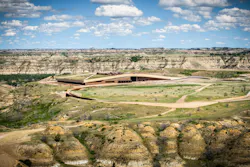
The Theodore Roosevelt Presidential Library recently opened in Medora, N.D., culminating decades of planning and more than six years of design and construction.
The 96,000-sf structure reunites Roosevelt’s scattered papers, artifacts, and storied life together in one place for the first time within a landscape that shaped the man and his presidency.
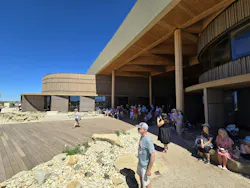
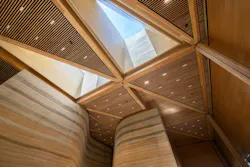
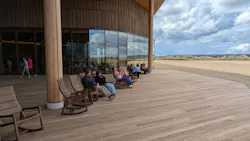
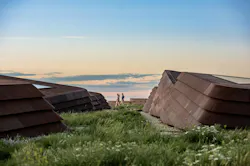
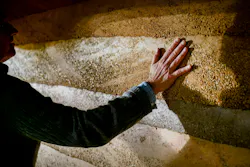
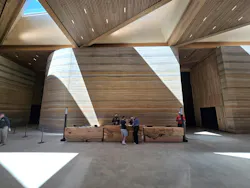
The structure features rammed-earth walls—two-foot-thick structures built from local soil, sand, and gravel. The layers echo the geology of the Badlands setting. Cross-laminated timber and glulam systems make the library the largest mass timber project in North Dakota.
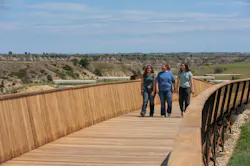
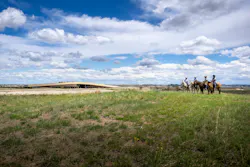
The 121,000-sf living roof is fully walkable and ADA-accessible. It includes 140,000 native prairie plugs that reduce stormwater run-off and support regional prairie restoration. The sculptural, geometric form of the roof’s skylights reflect the surrounding terrain and buttes, strategically placed to optimize daylight through all four seasons.
The facility is designed to be the only carbon-neutral presidential library in the world, operating on a “Four Zeros” framework: zero energy, zero carbon, zero water, and zero waste. A system of 216 geothermal wells is targeted to provide 105% of the building’s electricity needs.
The rammed-earth walls provide exceptional thermal mass, helping regulate indoor temperatures and reducing reliance on energy-intensive materials. An innovative low-carbon concrete used onsite was developed in partnership with Winn Construction, Beton, Dickinson Ready Mix Co., and Fisher Industries.
Reclaimed materials with deep historical resonance are woven throughout. Custom conference tables, podiums, signage, and desks were crafted with salvaged wood from a copper beech tree Roosevelt planted in the 1890s on his family’s estate at Sagamore Hill.
Water conservation measures include rainwater harvesting, reused non-potable water, low-flow fixtures, and living roof wetlands that restore the site’s natural hydrology. Site paths are surfaced with crushed brick aggregate sourced from rejected bricks at the Hebron Brick plant (Hebron, N.D.), and retaining walls and benches are built from reclaimed timber mats.
The highly sustainable design enabled one of the most ambitious green building strategies ever attempted: pursuing three concurrent high-level certifications—Full Living Building Certification (LBC), LEED Platinum, and SITES Platinum—simultaneously. To meet the Living Building Challenge’s rigorous standards, the ingredients of 29,776 building products were vetted with manufacturers to eliminate harmful “Red List” chemicals from their supply chains.
On the project team:
Owner and/or developer: Theodore Roosevelt Presidential Library Foundation
Design architect: Snohetta
Architect of record: JLG Architects
MEP engineer: Morrissey Engineering
Structural engineer of record: MKA
Local structural engineer: Heyer Engineering
General contractor/construction manager: JE Dunn
CBS Sunday Morning's Lee Cowan recently toured the Theodore Roosevelt Presidential Library and talked with key team members, including Snøhetta Co-founder and Partner Craig Dykers, FAIA.