Low Impact Development: Managing Stormwater Runoff
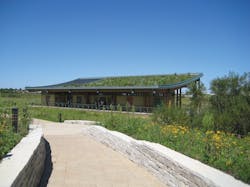
Low impact development (LID) refers to a comprehensive land planning and engineering design approach to managing stormwater runoff that emphasizes conservation and the use of on-site natural features to protect water quality. According to the nonprofit Low Impact Development Center, Beltsville, Md., the goal of LID is to “maintain and enhance the pre-development hydrologic regime of urban and developing watersheds while allowing for development or infrastructure rehabilitation.”
After reading this article, you should be able to:
- Understand how low impact development (LID) benefits the health, safety, and welfare of building owners, occupants, and the community.
- Know what to consider to incorporate LID into sustainable design and construction strategies.
- Discuss the “treatment train” and how various “best management practice” options are used to enhance project sustainability.
- List the life cycle cost advantages of LID and evaluate their sustainability advantages in specific projects.