




 |
| Lincoln Center’s walkable green roof is scheduled to debut next spring. The roof, in the form of a hyperbolic paraboloid, will reach a full height of 11 feet from the plaza level and 23 feet from the sidewalk level; it will extend down to the plaza on the south end, providing access for pedestrians. The cross section below depicts the composition of the green roof system. |
 |
27. Next-Generation Green Roofs Sprout up in New York
New York is not particularly known for its green roofs, but two recent projects may put the Big Apple on the map.
In spring 2010, the Lincoln Center for the Performing Arts will debut one of the nation's first fully walkable green roofs. Located across from the Juilliard School in Lincoln Center's North Plaza, Illumination Lawn will consist of a glass-walled restaurant topped with a 10,000-sf, sloped vegetated roof that will double as a campus lawn for students and the public.
The sloped green roof will add some much-needed softness to the hardscape that dominates Lincoln Center. "It will be a dynamic, engaging kind of space that people hopefully will want to run up on, play Frisbee, or relax," says Heidi Blau, AIA, LEED, partner with FXFOWLE Architects, which is collaborating with Diller Scofidio + Renfro on the Lincoln Center redevelopment.
To support the weight and handle the wear and tear from constant foot traffic, the design team specified a beefed-up version of a typical green roof system. A six-inch-thick composite poured-concrete/metal-deck structural slab rated for 100-pound live loads will support the 14-inch-thick vegetated roof. The slab will be supported on nine steel columns with five girders and 45 beams situated to create the saddle-like "hypar" roof shape. More on Illumination Lawn.
 |
| High-end condos at the 101 Warren St. mixed-use development in New York overlook a rooftop urban forest, complete with 101 pine trees. |
Four miles downtown, in Manhattan's Tribeca neighborhood, a new 950,000-sf mixed-use condo tower designed by Skidmore, Owings and Merrill features what can only be described as a miniature urban forest atop the building's five-story podium. SOM teamed with local landscape architect Thomas Balsley Associates to develop the intensive green roof, which is composed of 101 Austrian pines—some reaching 35 feet in height—planted in a soil bed up to 42 inches deep.
The entire green roof system—which includes a 12- to 16-inch-thick concrete slab topped with a 2 mm waterproof membrane, a root barrier, four inches of rigid insulation, a three-inch-thick drainage panel, geotextile fabric, planting soil, and three inches of mulch—extends six feet deep in certain areas—a depth that has been proven to be sufficient in urban settings and broad planting areas, says Thomas Balsley. He estimates that the trees will eventually reach 50 feet in height.
All residents of the 31-story 101 Warren St. condo tower have access to the rooftop pine forest, and many ultra-lux units overlook the trees. The building's developer, Edward Minskoff, was willing to take on the extra cost of the urban forest because of the unique selling point it offered to prospective condo buyers. It also gave tenants some much-needed green space.
"The notion of a garden in the sky is very appropriate to the urban condition in New York, where the ground plane is precious and, therefore, the opportunities for semi-public space is explored in the third dimension," says Mustafa K. Abadan, FAIA, SOM partner in charge on the project.28. New LEED Retail Programs Speed up Certification
The U.S. Green Building Council's stated goal of reaching 100,000 LEED-certified buildings by 2010 will require thousands of new commercial buildings certified in the next six months. The building type that goes up fastest in the largest numbers is retail commercial buildings. Retail buildings have been LEED registered as prototypes since 2005, but LEED for Retail Commercial Interiors and LEED for Retail New Construction, now open for member ballot, would allow much more flexible certification.
The USGBC is also publishing a LEED for Retail Best Practices manual, to illustrate the strategies used by companies in the LEED for Retail pilot. Any green feature that isn't repeatable for a large number of stores is meaningless in retail, so best practices are even more important than in other building types. Some of the companies participating include Office Depot (LEED Silver in its Austin, Texas, store with six other similar stores), McDonald's (several LEED-certified restaurants), and Chipotle (the world's first LEED Platinum, in Gurnee, Ill.). |
| When the green light is on (circled above), building occupants know it’s okay to open the windows because outdoor air will moderate the building’s mechanical system performance. |
29. Notification System gives Teachers the Green Light to Open the Windows
One of the biggest complaints among K-12 school facility managers is the conflict that arises when teachers and students open the windows during not-so-ideal climate conditions. Introducing outside air into a conditioned building can decrease the mechanical system's efficiency if the outdoor climate conditions increase heating or cooling demands already being made on the mechanical system.
Since most K-12 school districts don't have the budget for high-end automated climate controls, communication and education are often the only tools facility managers have to prevent occupants from opening the windows during less-than-optimal weather conditions.
To help some of its K-12 school clients minimize energy costs, NAC¦Architecture has implemented a simple, inexpensive notification system made up of red and green lights located in the corridors. When the green lights are on, the windows can be opened to help cool the classroom spaces. When the red lights are on, all windows should remain shut, as outdoor air will inhibit the mechanical system's ability to properly condition the building.
"This system is an economical approach to the age-old quandary regarding operable windows," says Dana L. Harbaugh, AIA, LEED, principal architect with NAC¦Architecture, who developed the system. "It asks building users to facilitate environmental stewardship on a daily basis, raising awareness of their impact on energy usage."
Related Stories
Industrial Facilities | Apr 9, 2024
Confessions of a cold storage architect
Designing energy-efficient cold storage facilities that keep food safe and look beautiful takes special knowledge.
AEC Innovators | Feb 28, 2024
How Suffolk Construction identifies ConTech and PropTech startups for investment, adoption
Contractor giant Suffolk Construction has invested in 27 ConTech and PropTech companies since 2019 through its Suffolk Technologies venture capital firm. Parker Mundt, Suffolk Technologies’ Vice President–Platforms, recently spoke with Building Design+Construction about his company’s investment strategy.
MFPRO+ Special Reports | Feb 22, 2024
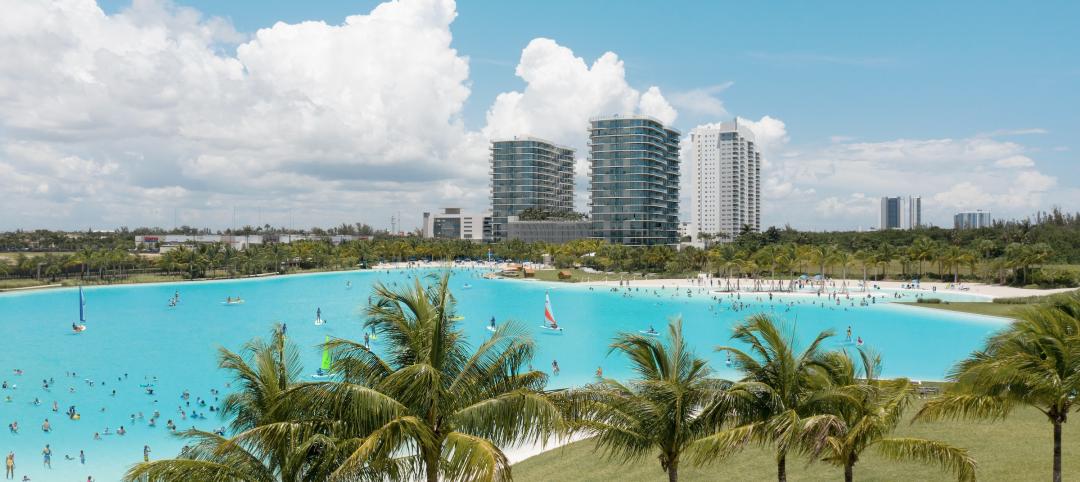
Crystal Lagoons: A deep dive into real estate's most extreme guest amenity
These year-round, manmade, crystal clear blue lagoons offer a groundbreaking technology with immense potential to redefine the concept of water amenities. However, navigating regulatory challenges and ensuring long-term sustainability are crucial to success with Crystal Lagoons.
AEC Tech | Feb 20, 2024
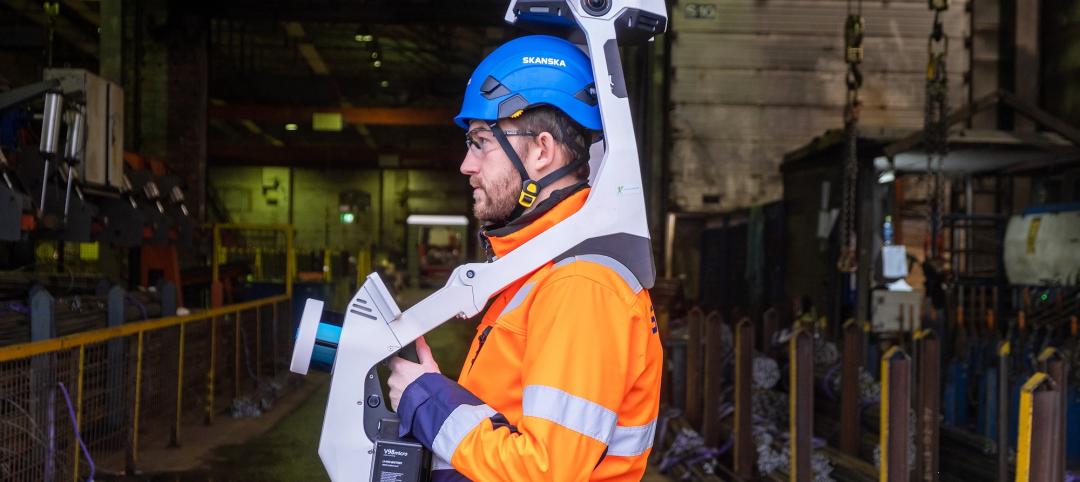
AI for construction: What kind of tool can artificial intelligence become for AEC teams?
Avoiding the hype and gathering good data are half the battle toward making artificial intelligence tools useful for performing design, operational, and jobsite tasks.
Building Tech | Feb 20, 2024
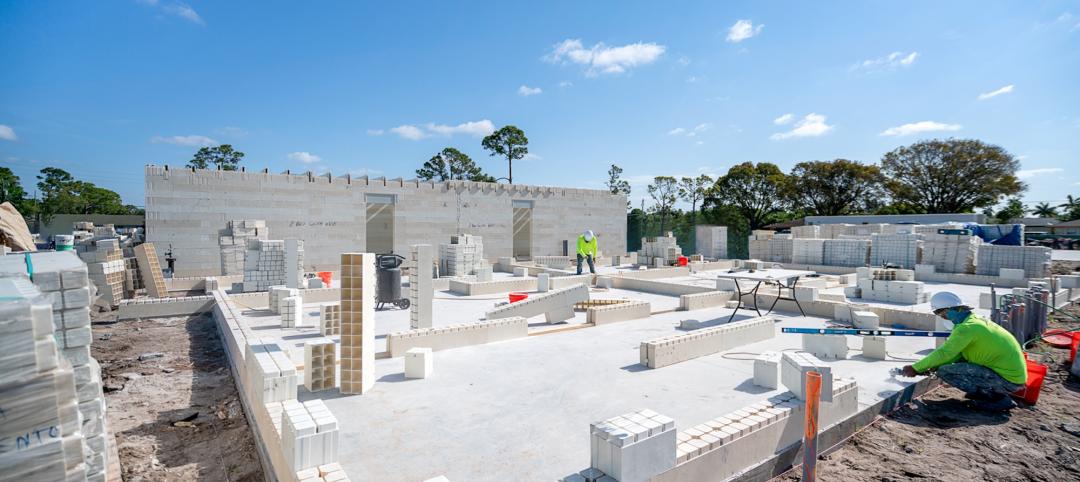
Construction method featuring LEGO-like bricks wins global innovation award
A new construction method featuring LEGO-like bricks made from a renewable composite material took first place for building innovations at the 2024 JEC Composites Innovation Awards in Paris, France.
Modular Building | Jan 19, 2024
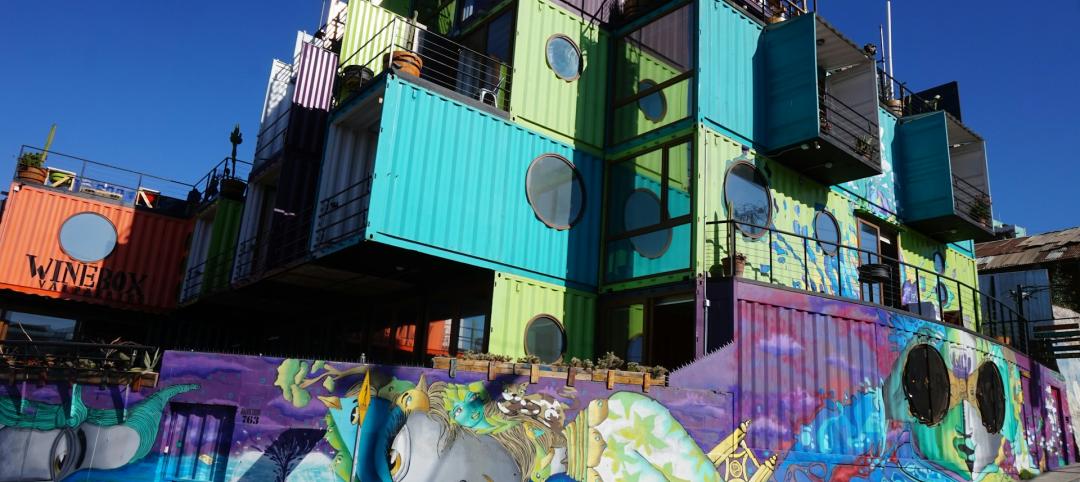
Building with shipping containers not as eco-friendly as it seems
With millions of shipping containers lying empty at ports around the world, it may seem like repurposing them to construct buildings would be a clear environmental winner. The reality of building with shipping containers is complicated, though, and in many cases isn’t a net-positive for the environment, critics charge, according to a report by NPR's Chloe Veltman.
Sponsored | BD+C University Course | Jan 17, 2024
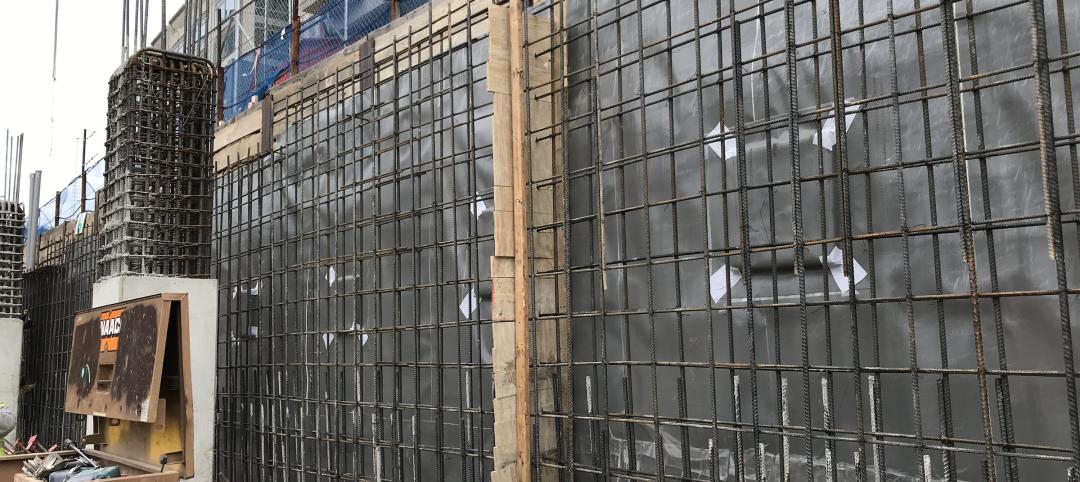
Waterproofing deep foundations for new construction
This continuing education course, by Walter P Moore's Amos Chan, P.E., BECxP, CxA+BE, covers design considerations for below-grade waterproofing for new construction, the types of below-grade systems available, and specific concerns associated with waterproofing deep foundations.
Mass Timber | Jan 2, 2024
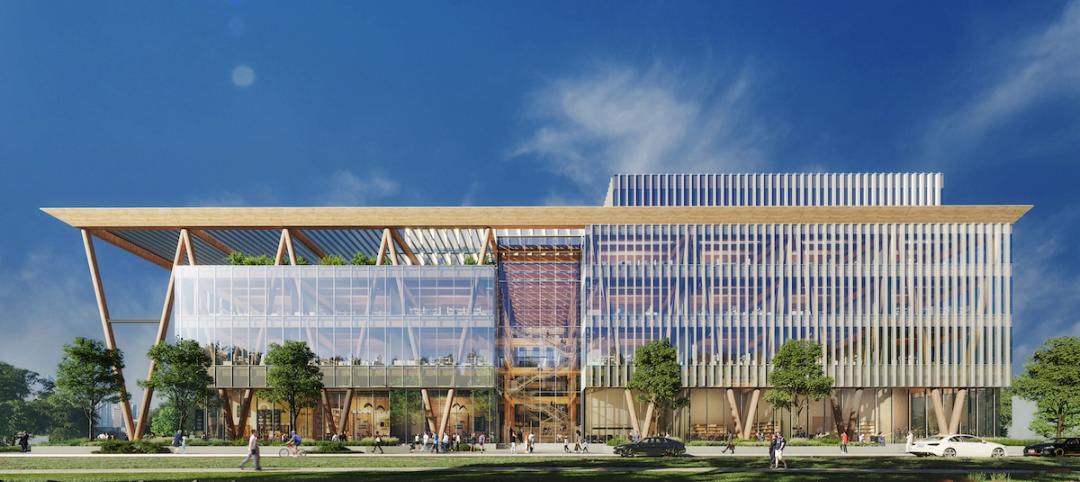
5 ways mass timber will reshape the design of life sciences facilities
Here are five reasons why it has become increasingly evident that mass timber is ready to shape the future of laboratory spaces.

Sustainability | Nov 1, 2023
Researchers create building air leakage detection system using a camera in real time
Researchers at the U.S. Department of Energy’s Oak Ridge National Laboratory have developed a system that uses a camera to detect air leakage from buildings in real time.
Engineers | Oct 12, 2023
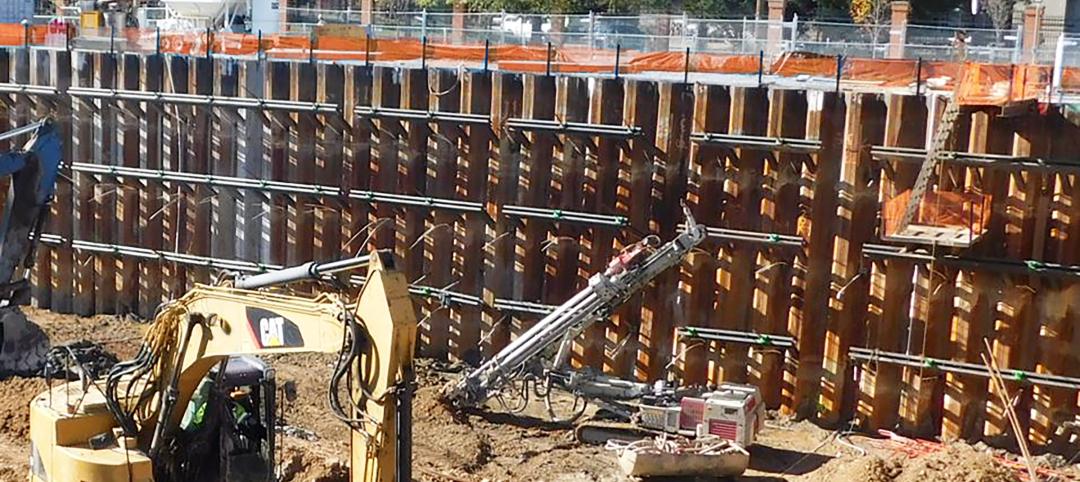
Building science: Considering steel sheet piles for semi-permanent or permanent subsurface water control for below-grade building spaces
For projects that do not include moisture-sensitive below-grade spaces, project teams sometimes rely on sheet piles alone for reduction of subsurface water. Experts from Simpson Gumpertz & Heger explore this sheet pile “water management wall” approach.